An Emergency App
Think fast: What does your school district’s emergency plan direct you to do if a teacher you were talking to suffered a sudden heart attack? Do you have to look it up? Where is it?
What about this: What does your school district’s emergency plan direct you to do if you come across an abandoned package that looks suspicious to you? Do you have to look that up too?
Have you read your emergency plan?
According to a survey conducted by SchoolDude, an education asset management firm, 79 percent of all schools communicate their emergency plans on paper in binders. Do you have the emergency plan on a binder in your office?
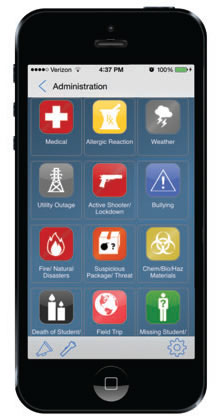 Discovering that, SchoolDude came up with an idea that will put your emergency plan at the fingertips of every single teacher and administrator in your school and school district.
It’s a smartphone app called CrisisManager. You will find it at your app store — SchoolDude has released versions for all of the major smartphone operating systems.
It has a sample emergency plan for administrators. That, of course, isn’t your school’s plan, but you can load your plans — for administrators, teachers and even students — into the app.
The material stays in the smartphone’s memory — not online — but inside the smartphone. When the emergency plan gets updated, notifications go out to everyone registered in the system, and everyone can download the update.
If an emergency cuts off power, and the Internet goes down, and nearby cell towers go down, everyone in your school will have the information necessary to dealing with the emergency on personal cell phones.
That way you won’t have to memorize an emergency plan printed on paper and stored in a binder on a shelf — somewhere.
This article originally appeared in the issue of .