Evacuate Quickly and Safely in Any Situation
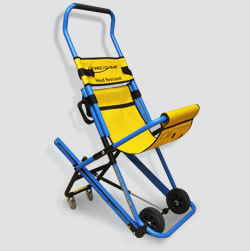
EVAC+CHAIR makes it possible for everyone to evacuate quickly and safely in an emergency, making them key to Cal. State University Long Beach’s emergency preparedness plans.
Evacuate Quickly and Safely in Any Situation CONTINUING to improve campus safety in case of an emergency, EVAC+CHAIR Evacuation Chairs have been installed in every multiple-story building at California State University Long Beach to provide those with access needs — such as those who are wheelchair bound or have been injured — a safe means of evacuation during an emergency.
EVAC+CHAIRs — 120 of them are located strategically across campus — are marked with a bright yellow cover and a photo-luminescent sign above them. The chairs fold up, allowing them to be easily transferred to the individual in need, hang on the wall and are lightweight, weighing only 19 pounds.
The EVAC+CHAIR is a universal evacuation solution for smooth stairway descent, without the need of great physical strength or lifting. The device will assist staff, students and visitors with temporary or permanent mobility impairment. It is lightweight and easy to use allowing wheelchair users or less able-bodied people to be evacuated quickly and safely down stairs in the event of an emergency.
Cal. State University Long Beach has encouraged staff and students with a mobility impairment to make themselves known, to ensure they are given high priority should the worst happen and an EVAC+CHAIR need to be used.
Regular fire drills and practice training are also part of the plan in an effort to improve safety and to safeguard the smooth operation of procedures. “In the event of an earthquake or a fire, you’re not allowed to use the elevators so those with access and functional needs, persons with disabilities, or those who have been injured above the first floor won’t readily be able to get downstairs to ground level,” says John Rosene, emergency management and preparedness coordinator at the university. “So in an effort to be ahead of the curve, institutions are moving towards this.”
www.evac-chair.com
This article originally appeared in the issue of .