BYOB (bottle)
 The Environmental Protection
Agency has recently released
a drinking water action plan. This
plan focuses on six strategic priority areas
with one area emphasizing the improvement
of transparency, public education, and risk
communications concerning drinking water
safety. There continues to be much debate
over the quality of drinking water across the United States. EPA
administrator, Gina McCarthy, recently stated, “Ensuring that all
Americans have access to safe drinking water is an absolute top
priority for the EPA.” There is no better place to start than within
our schools making sure that all students and staff have the best
resources for safe drinking water.
The Environmental Protection
Agency has recently released
a drinking water action plan. This
plan focuses on six strategic priority areas
with one area emphasizing the improvement
of transparency, public education, and risk
communications concerning drinking water
safety. There continues to be much debate
over the quality of drinking water across the United States. EPA
administrator, Gina McCarthy, recently stated, “Ensuring that all
Americans have access to safe drinking water is an absolute top
priority for the EPA.” There is no better place to start than within
our schools making sure that all students and staff have the best
resources for safe drinking water.
Bottle filling stations in schools is an excellent way to promote
healthy habits for students, drinking water safety, and sustainability.
Water filling stations have become very common across
the country especially at higher education campuses. One good
example of this is New Mexico State University where over 30
refillable water bottle stations have been established on their
campus. The use of a filtered water bottle filling system promotes
awareness and can allow for students at all levels to reuse their
own personal water bottle.
Adequate water intake for students is important for everyday
health. Many of our students are consuming
sugary juices and sodas instead of drinking
an adequate amount of water each day.
Schools across the country can encourage
student and staff water consumption by
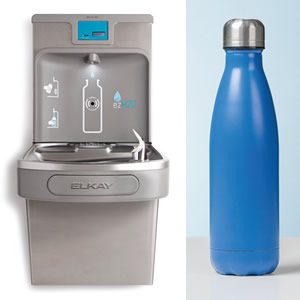
establishing water filling stations. Elkay
commercial products promote a reasonably
affordable water bottle retrofit system for
most of their existing Elkay water fountains.
As healthy school environments continue to be a focus in public
schools, what an excellent time to use water consumption as a
learning tool for students.
Many localities and school divisions have been asked to
demonstrate their ability to provide safe drinking water. Lead
and other contaminates should be a concern in our schools water
supply. A filtered system that enhances the extraction of these
elements is an asset. Having the safest possible water is essential
to student health and has some correlation to student learning.
The filtered water bottle stations are fairly easy to maintain and
the filters tend to be very affordable and only need to be changed
around every 3,000 gallons of consumption.
Bottled water has also become a significant resource for students
in many schools. Students and staff have a reoccurring cost
to purchase water at school. In the promotion of green school best
practices, the amount of plastic bottles
thrown away and that are accounted for
should be a concern for the environment
and sustainability efforts. A filtered water
bottle filling station eliminates the need
for all of the plastic water bottles consumed
and then discarded. Schools can be
proactive and design their own refillable
water bottles that can incorporate the
school logo. What a great way to promote school spirit and healthy
school environments.
Filtered water bottle filling stations offer an excellent resource
to enhance student and staff wellness. Healthy and safe water continues
to be a concern for all students and staff. The Elkay water
bottle retrofit product is only one example that helps promote safe
and healthy drinking water. Advocating safe and healthy environments
in schools is essential to the well-being of our children.
This article originally appeared in the issue of .
About the Author
John A. Bailey, Ph.D. is the director of School Plants for Chesapeake Public Schools and a National School Plant Managers Association board member, representing Virginia, and a Virginia School Plant Managers Association board member, representing Region II, in Virginia.