University of Idaho Arena Project Moves to Bid and Construction

MOSCOW, ID – The Idaho State Board of Education (SBOE) has unanimously approved the University of Idaho’s (U of I) request to proceed with the bidding and construction phase of the signature 4,200-capacity Idaho Central Credit Union (ICCU) Arena project. The project will go out for bid and will break ground soon, with building completion expected in the fall of 2021.
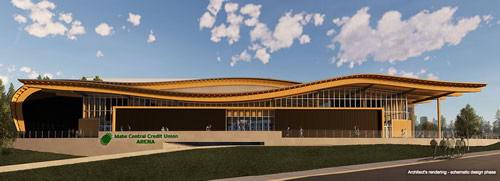
University of Idaho Arena

The ICCU Arena will be a showpiece for U of I’s student-athletes, the Vandals, tell the story of Idaho’s heritage, and provide a unique gathering place for generations of Vandals to come. The state-of-the-art arena will provide a teaching facility and the best game atmosphere while also acting as a recruiting showpiece. A practice court will provide attractive and versatile competition space and provide much-needed first-class practice facilities.

The innovative mass-timber construction of the building brought wood industry partners from across the state to the project. These critical partners plan to provide in-kind gifts that may reduce the cost of the building—one that will stand as a stunning example of modern wood construction.

Featured

  • Hawaii Elementary School Reopens Following $25M Campus Modernization

    Haʻaheo Elementary School in Hilo, Hawaii, has reopened to students following a three-year, $25-million campus modernization and expansion project that significantly increases the school's instructional space while preserving one of the island's oldest educational institutions, according to local news.

  • Sam Houston State University Completes Athletic Stadium Renovations

    Sam Houston State University in Huntsville, Texas, recently announced the reopening of Elliott T. Bowers Stadium after an extensive renovation project, according to a news release. The university partnered with Stantec and DLR Group for the project’s design.

  • Rethinking K-12 Schools as a Continuous Learning Experience

    Most students move through three or more separate facilities during their K-12 journey, yet the built environments they encounter at each stage have traditionally been designed in isolation, with little continuity in spatial language, learning philosophy, or physical resources. Each new school is a reset with different layouts, learning models, expectations, and ways of moving through a building. The next generation of school design is making the case that the first day of kindergarten and the last day of high school can and should feel connected through common support systems and infrastructure in the physical environment.

  • ed tech conference calendar

    Upcoming Awards, Events & Webinars