University of North Dakota Breaks Ground on Fraternity House

GRAND FORKS, ND – In 1922, the Alpha Tau Omega (ATO) house was built on the Grand Forks, ND, campus of the University of North Dakota (UND), helping establish a Greek tradition at UND that has stood the test of time. The facility was damaged in the the 1997, however, resulting in the demolition of the house in 2007.
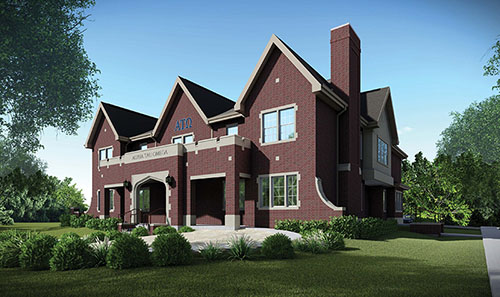
University of North Dakota

In late July, leaders of ATO and UND broke ground on a spectacular new building, aiming to ensure the chapter’s physical presence for another 100 years. The new version of ATO will be the first fraternity house built on campus since Pi Kappa Alpha’s rebuild in 2004.

Funding for completing the project debt-free is being raised by alumni in a three-year fund drive, with more than 85 percent of the construction goal already pledged.

Scheduled for completion by August 2020, the new ATO house will feature accents aligning it with the Collegiate Gothic architecture of UND while providing top-of-the-line facilities to residents of the Delta Nu Chapter.

Featured

  • Spaces4Learning Trends & Predictions for Educational Facilities in 2026: Part I

    We asked, you answered, and the results are in! Last year, we put out a call for submissions to collect our readership’s opinion on trends and predictions for K–12 and higher education facilities in 2026.

  • Houston K–12 District Opens New Elementary School

    The Lamar Consolidated Independent School District (Lamar CISD) recently announced the completion of a new elementary school in a western suburb of Houston, Texas, according to a news release. Haygood Elementary School measures in at 110,000 square feet, has the capacity for 854 students, and is the first of three new schools scheduled to be built in the Cross Creek West community.

  • University of Arizona Approves New Residence Hall

    The Arizona Board of Regents recently approved plans for a new residence hall at the University of Arizona in Tucson, Ariz., according to a news release. The new facility is scheduled to open in fall 2028 and have the capacity for more than 1,200 students, enforcing a new university expectation that all first-year students live on campus.

  • Pitzer College

    Designing for Change in Higher Ed Learning Environments

    Higher education will continue to evolve, and learning environments must evolve with it. By prioritizing adaptable infrastructure, thoughtful reuse, strong energy performance, and wellness-centered design, campuses can create spaces that support learning today while remaining flexible for the future.