How to Incorporate Mindfulness in the Classroom
- By Yvonne Marquez
- 04/22/20
Pre-K and kindergarten students at Centner Academy in Miami begin their school day with a gratitude circle. Led by mindfulness coach Gabriela Jimenez, the students kick off their morning with a 30-minute routine that includes singing and moving to an uplifting song, breathing exercises, practicing silence and ending with positive affirmations like “I am love” and “I choose to feel magical today.”
“I use different techniques that are all guided towards the same goal and the goal is to have the kids start a beautiful day — a day where they feel empowered.” Jimenez says.
The techniques help children take charge of their emotions, Jimenez explains. She teaches students to apply the techniques when they’re in emotional distress to help them feel better, especially now in the time of coronavirus. It also helps children build empathy, compassion, and connection with one another.
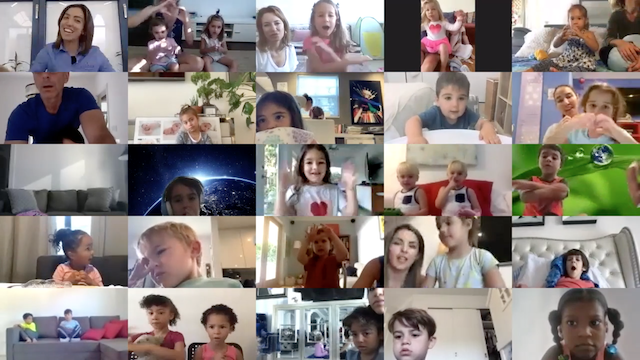
This has been a part of the students’ morning routine since they started the school year in August. But lately, they’ve been doing it from their homes on Zoom and sometimes with their parents. Like every student across the country, students at Centner Academy have been learning remotely for the past several weeks to prevent the spread of COVID-19.
Centner Academy, a school with students from pre-K to 8th grade, currently offers the mindfulness program to pre-K and kinder students. Leila Centner, co-founder of the school, says she has seen a distinct difference between the group of kids who started the mindfulness program and the kids who haven’t participated in the program yet.
“For our older kids, they're struggling a little bit more,” Centner says. “They are having a hard time not being with their friends.”
She says teaching kids self-love and giving them the tools to become more resilient and have more grit allows them to handle these types of situations better. The school will be rolling out the mindfulness program to all grade levels starting in the fall, she says.
“Grit and resilience are going to be a very, very big part of our school because we're saying that it's everything — the power of their mind is everything,” Centner says. “The coronavirus has really kind of highlighted how important it is to have them have a strong mind.”
Tips on how to start a mindfulness practice in your classroom
Many schools are struggling to teach core lessons remotely and may not have the resources for a full mindfulness program. Jimenez offers some tips for schools who may want to incorporate mindfulness techniques in the classroom and for parents too.
Start the day with a gratitude exercise
Jimenez suggests starting every day with a gratitude exercise and adding it to a daily schedule just like any activity. There are lots of free apps and mindfulness activities on the internet available to teachers and parents who want to incorporate mindfulness into their child’s routine. The key to success is consistency, Jimenez says.
“It needs to be something that you cultivate just like a muscle, right? If you workout once in a while, your muscle won't get stronger. It's the same way. You have to really take this every day and do it.”
Acknowledge your own emotional process
One way parents can practice mindfulness with their children is to acknowledge their own emotional process in front of them, Jimenez says. For example, if parents or adults are frustrated, Jimenez suggests letting the child know that you are frustrated and taking a two-minute break together to focus on breathing or jumping up and down outside or playing a song. “Little exercises that you can do like that takes no time — three or four minutes — and you can reboot your system,” she says.
Meditation for teachers and administrators
Jimenez has guided teachers and administrators at Centner Academy in meditation. She suggests teachers and administrators specifically set intentions for students, for parents and themselves during a weekly meditation.
“Administrators also feel a lot of pressure because it's a different system and now they're having to deal with so many other aspects of how to deliver curriculums or assessments through online platforms. So, really doing meditations that are forms of sending healing to others and sending healing towards oneself, are really powerful ways to self-empower.”
Focus on emotional intelligence
As summer approaches, schools are ending an unprecedented school year with many questions up in the air of how school will be conducted in the fall. Centner Academy plans to offer an online program, open to students across the country, in the fall.
Jimenez believes now is an opportunity for educators to invest in curriculums that nurture the emotional well-being of students.
“We as educators need to really make a commitment to change education and to focus more on emotional intelligence,” she says. “Because if we do that, we will have happier, more integrated societies. We would have so much overall success and I'm not talking about just performance. We'll have happier successful children and individuals. So I think families overall would be able to handle a crisis like this from a different place.”
About the Author
Yvonne Marquez is senior editor of Spaces4Learning. She can be reached at [email protected].