UW-Platteville to Build 2.4MW Solar Array
- By Dian Schaffhauser
- 02/23/21
The University of Wisconsin-Platteville has received approval from the state to erect a 2.4-megawatt solar array on its campus. According to the university, this will be the largest solar array owned by a Wisconsin state agency and will make the campus the sixth-highest on-site producer of renewable energy in the country among institutions of higher education.
According to a university article on the project, the array will feed directly into the main electricity meter connected to the 32 campus buildings, generating all electricity in real-time, rather than sending it back to the grid. The solar is expected to offset electricity by 17%, saving an annual $217,000 and reducing carbon emissions by 2,300 tons per year. The campus also hosts a wind turbine and a smaller rooftop solar project on its Engineering Hall.
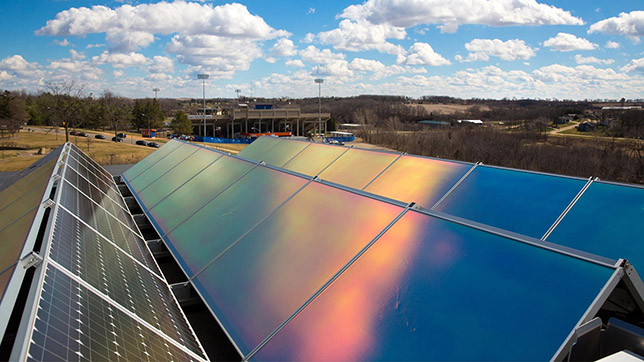
The existing solar array on the rooftop of Engineering Hall at the University of Wisconsin-Platteville
Source: University of Wisconsin-Platteville
The project was instigated when some 300 students at the school signed a petition in 2018, asking the administration to achieve 100% renewable energy for the campus by 2030. In the following year, 82% of students agreed with the goal in a referendum. The array is one of several projects now being advanced by the university to achieve carbon neutrality.
A chain-link fence will surround the array, which will be installed with pilings. The array is expected to have a 30-year life and is designed to accommodate future battery storage.
The array work is also providing students with opportunities for hands-on learning. Faculty are incorporating related projects into their coursework. Students in a sustainable and renewable energy systems course helped design the initial project. Dairy science students formed a plan for sheep grazing under the array. And reclamation, environment and conservation students developed a native pollinator seeding plan for the space.
"We are excited to take this momentous step in our commitment to sustainability," said Chancellor Dennis Shields in a statement. "These efforts will save taxpayer money and have a lasting impact on future generations of Pioneers."
The array is scheduled to be operational by fall 2021.
About the Author
Dian Schaffhauser is a former senior contributing editor for 1105 Media's education publications THE Journal, Campus Technology and Spaces4Learning.