Campbellsville University Broadcast Studio Gets LynTec Power Control System
Campbellsville University in Campbellsville, Ky., has partnered with JCA Media to select LynTec, an electrical power control solutions manufacturer for professional audio, video and lighting (AVL) systems, to supply products for the university’s broadcast studios. Integration firm JCA Media has already installed LynTec’s lighting control panels in other buildings around campus. With these previous experiences in mind, the firm installed LynTec’s Remote Control Braker Panel as a user-friendly, circuit-level zoned control mechanism in the university’s mass communication’s center’s television broadcast studios.
“We consistently use the company’s LCRP retrofit boxes for churches that are changing out their old-school dimming systems to LED, where they need to be able to have DMX relays to turn off their circuits,” said Alex Peake, JCA Media integration specialist. “LynTec has always been a great solution for us. It’s 100 percent reliable, and they have great customer support that always takes the time to walk me through any questions I might have. It was the perfect answer for the university’s TV studio.”
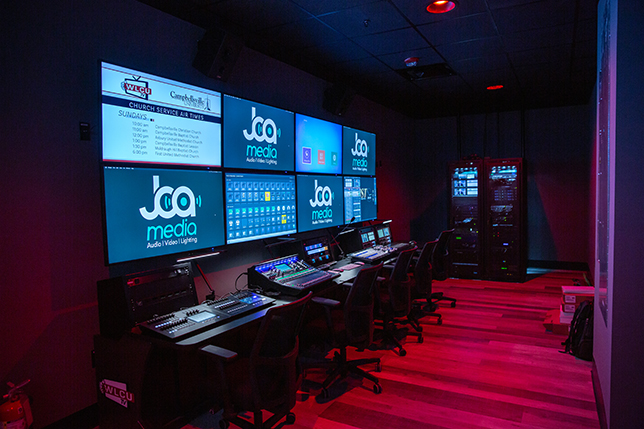
JCA Media Selected LynTec Panels to Power Broadcast Studio.
The single-panel RPC features the flexibility to work with a number of control platforms like DMX, HTTP, Telnet, sACN, RS-232, and BacNET. It offers features like circuit protection, power management, on/off control, and power sequencing. The RPC is programmed for three zones, consisting of the two studios and the control room. It provides protection from brownout as well as over- and under-voltage protection, sends notifications, and enables remote monitoring.
“The ability for broadcast teams to go live at any time depends on the seamless control and power protection of their AVL systems,” said LynTec president Mark Bishop. “The installation at Campbellsville University, under the guidance of JCA Media, illustrates how our RPC panel provides invaluable control and protection that improves the performance and lifespan of their AVL systems and fits right into any production workflow.”
About the Author
Matt Jones is senior editor of Spaces4Learning. He can be reached at [email protected].