Cambrian College to Save $480K in Energy-Related Upgrades
- By Dian Schaffhauser
- 10/13/21
Ontario-based Cambrian College is moving into the next phase of a long-term agreement with Honeywell and Honeywell Building Technologies to replace aging equipment and update lighting in pursuit of energy savings. The improvements are expected to save the college at least $480,000 within the first year. Those savings, guaranteed by Honeywell, will be plowed into funding some of the upgrades.
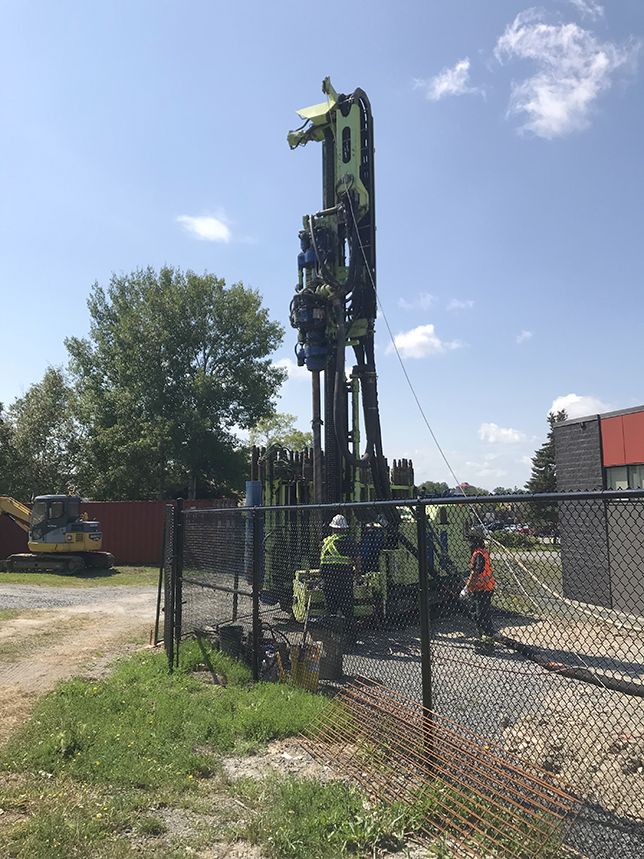
Honeywell staff install a geothermal heating and cooling system at Cambrian College as part of the college's energy efficiency and sustainability initiatives.
Source: Honeywell
The work, focused on support of energy conservation measures and creating more comfortable learning spaces, will include:
- Implementation of a geothermal heating solution, to deliver supplemental heating and cooling and intended to help offset boiler consumption in the building housing Cambrian’s Sustainable Energy Centre of Excellence;
- Upgraded smart LED lighting and fixtures, which will help the college understand how its physical areas are being used;
- Installation of a high-efficiency chiller, to replace a legacy chiller; and
- Deployment of a building management system, which enhances the campus' existing Honeywell Enterprise Buildings Integrator building automation system.
"A leading mission of Cambrian College is our commitment to reduce our carbon impact," said Kristine Morrissey, vice president of Cambrian's divisions of International, Finance and Administration, in a statement. "This project will allow us to do just that. We anticipate the project will reduce approximately 300 tons of greenhouse gasses a year, which is the equivalent of removing close to 100 medium-size cars from the road every year. In addition, the project is supporting the modernization of our campus in both its digital and physical space, which ultimately will provide our students and faculty an improved education environment."
The college began collaborating with Honeywell in 2013. Under that agreement, Honeywell committed to working with Cambrian, to review its facility and energy needs regularly and identify areas where the college could reduce operating expenses and greenhouse gas emissions. In turn, Cambrian agreed to provide training for Honeywell’s building technicians in Canada, along with other professional development services.
About the Author
Dian Schaffhauser is a former senior contributing editor for 1105 Media's education publications THE Journal, Campus Technology and Spaces4Learning.