UC Davis Housing Redevelopment to Accommodate Four Times More Students
- By Dian Schaffhauser
- 12/08/21
Construction is moving apace on a 1,600-bed student housing community for the University of California, Davis. Scheduled for completion in fall 2023, the community will provide 189 two-bedroom units for students with families and 424 studios and four-bed apartments for 1,100 graduate students. That's four times more students than the original university housing development that was on the site could support.
Orchard Park Redevelopment, as the project is named, is the second phase of a larger development named The Green at West Village, which is being built through a public-private partnership between the university and The Michaels Organization (TMO). The first phase delivered 1,000 beds in fall 2020 and included nine four-story buildings. Shared amenities for residents include a fitness center, multipurpose room and student support services. According to TMO, that property was fully leased ahead of the 2020-2021 academic year.
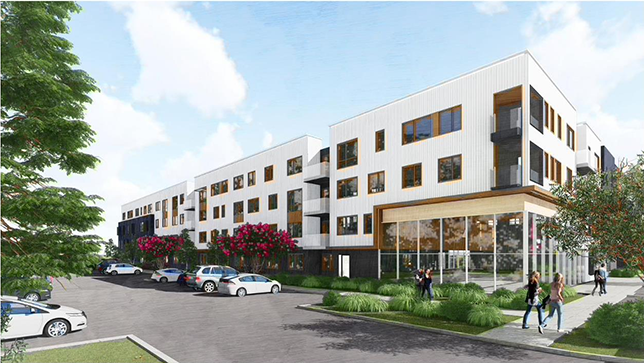
Source: University of California, Davis
The original Orchard Park, building 1964, served as apartment-style family housing for students until 2015. In that year the facility was closed to prepare it for redevelopment.
The new family housing, built to LEED Silver level, will feature two community centers, one for the single graduate community and the other for the family community. Those centers will each have meeting space, community kitchens, exercise room and flex space. The family community center will also have children's indoor and outdoor play areas. The family apartments will have their own washers and dryers. The graduate community will have central laundry rooms on every other floor within the buildings.
The site is being designed to be bicycle-oriented while also placing focus on alternative transportation solutions. For parking, the family residents will be given first priority.
The project is being carried out as public-private partnerships funded through tax-exempt bond sales. While TMO is the developer, the buildings will be owned by a national nonprofit organization, Collegiate Housing Foundation, with a ground lease from the university. The facility will be managed by TMO's Student Living Management division, with university Student Housing and Dining Services providing marketing, leasing and on-site student support services.
"It will make a substantial difference for graduate students," said Jonathan Minnick, president of the UC Davis Graduate Student Association. "A significant percentage of each cohort of graduate students will have the opportunity to live on campus."
Minnick added that "the fact that students with families can be in this community and be supported is just a great opportunity."
About the Author
Dian Schaffhauser is a former senior contributing editor for 1105 Media's education publications THE Journal, Campus Technology and Spaces4Learning.