Penn Installs Induction Light Fixtures
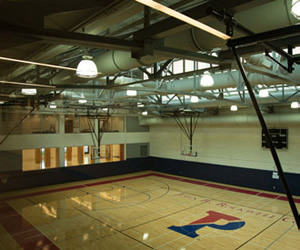
The University of Pennsylvania utilized the efficiency of Everlast products in its overhaul of the Huchinson Gymnasium, delivering a savings of over 60 percent per year
Founded by Benjamin Franklin, the University of Pennsylvania is a private, Ivy League research university located in Philadelphia. Recently, the university has adopted several strong sustainability initiatives on their campus, such as the Green Campus Partnership, in an effort to become more energy efficient. In the spring of 2013, Penn partnered with Atlantech, Inc. and EverLast Lighting as they began the initial stages of a major lighting overhaul at their Hutchinson gymnasium. The university focused on a commercial lighting solution that would meet their facility codes while improving illumination and significantly lowering energy costs.
Due to the demands of the Hutchinson gymnasium, facility managers were concerned about light levels, installation deadlines, reliability and procuring a fixture that would meet the energy reduction and U.S.-made requirements. “As this project was for an upgrade to their sports complex gymnasium, I suggested the EverLast fixture due to both the color temperature and high CRI ratings, as they were the most advantageous for events and broadcasting,” explains Ryan Miller, representative of Atlantech. “In addition, the 100,000 hour lifespan of the fixture, coupled with a 10-year warranty and no maintenance costs, made EverLast the superior commercial option.”
The university replaced 100 1,000-watt metal halide high-bay fixtures with EverLast 400-watt open rectangular induction lights, delivering a savings of over 60 percent per year.
EverLast induction light fixtures are 50 to 70 percent more energy efficient than metal halides and last up to 100,000 hours, making them virtually maintenance free for up to 15 years. The EverLast 400-watt open rectangular high-bay fixtures provide a more natural and high color rendition light quality unlike traditional metal halide fixtures. EverLast Induction lighting fixtures are also available with a dimmable option, providing even more energy savings while areas are vacant.
www.everlastlight.com
This article originally appeared in the College Planning & Management October 2013 issue of Spaces4Learning.