Setting the Bar High for Green Energy
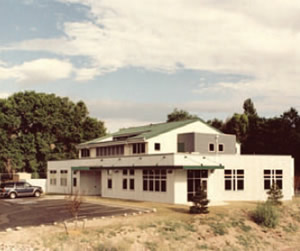
The Poudre Valley School district is seeing long-term drops in energy usage and costs as a result of installing ClimateMaster pumps and units in their new buildings.
For almost two decades, the Poudre Valley School District (PSD) in Ft. Collins, Colo. has been a vanguard of energy conservation and management initiatives on a national level. In an era of ever-shrinking budgets, fewer dollars expended on energy means more of the district’s funds can go toward actual education. For PSD, it isn’t just about being green: reducing energy costs is essential to protecting the educational mission of the schools.
In the late 1990s, PSD began exploring energy- and cost-efficient designs for new construction to be funded by a school district bond. A team of PSD planning, design and construction staff chose the new facilities and operations building to launch cutting-edge, energy-efficient technology it planned to include in subsequent construction projects throughout the district.
Inside the new building, nine ClimateMaster Genesis Packaged (GS) vertical units supplying 18 tons of total capacity were installed above the ceiling between the first and second levels to heat and cool each of the building’s nine zones.
According to PSD Energy Manager Stu Reeve, who has spent almost 25 years analyzing geothermal technology and has visited various manufacturers’ facilities, “ClimateMaster units are excellently designed and built with maintenance personnel in mind.”
The energy performance of the Climate-Master pumps in the new building has been nothing short of stellar. Initially earning an ENERGY STAR rating of 97 out of 100 in 2003, it received a rating of 100 in 2005, and a 99 rating for each of the last 6 years. According to Reeve, the 99 rating is 15 points higher than the average for all Colorado ENERGY STAR buildings and plants.
For the Poudre Valley School District, the real success story of the operations building lies in the long-term savings in energy use, and thereby costs. “The ClimateMaster ground source heap pump HVAC system at our operations building has become the benchmark high-efficiency standard for both comfort and energy performance at PSD, and in the state of Colorado,” Reeve concludes.
www.climatemaster.com
This article originally appeared in the School Planning & Management December 2013 issue of Spaces4Learning.