Demonstrating a Commitment to Sustainability
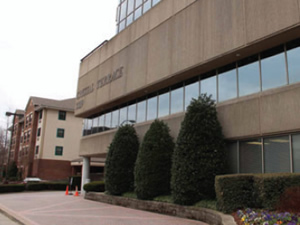
Lochinvar helped Vanderbilt University to maintain a commitment to sustainability when it came time to upgrade the Crystal Terrace building.
Vanderbilt University in Nashville, TN, continues to demonstrate its commitment to sustainability as part of its SustainVU efforts, an ongoing program to improve the university’s impact on the community and the environment. As part of these efforts, the Vanderbilt Plant Services team set out to replace the existing boiler system as part of an efficiency upgrade at its Crystal Terrace building in October 2010.
Crystal Terrace is a nearly 110,000-square-foot multi-tenant building used by Vanderbilt University Medical Center. The facility houses multiple floors of offices as well as the Finance Department, Strategic Planning Department, Women’s Health Services and the Space and Facilities Planning Department.
The Vanderbilt Plant Services team met with Lochinvar to discuss options for replacing the 25-year-old existing steel tube atmospheric boiler. The Vanderbilt team chose to replace the existing boiler with the high-efficiency CREST and Power-Fin models.
Despite the complexity of getting the boilers into the mechanical room, the CREST Boiler’s SMART TOUCH operating control simplified the rest of the installation. Utilizing CREST’s built-in cascading sequencer, the two boilers are operating in a cascade sequence as a front-end loading system. The CREST carries the load approximately 80 percent of the time, and the Power-Fin is brought on during the coldest days to help meet the largest heating demands.
Since the installation, the Vanderbilt Plant Services team reports that the Crystal Terrace building has used an average of 23 percent less fuel per month in comparison to the old system.
“Vanderbilt has made sustainability a top priority in recent years, and we continue to work towards enhancing environmental efficiency on campus,” states Mike Gable, P.E., CEM, Office of Space and Facilities Planning. “We could not be more pleased with the performance of this technology and the significant energy savings we have achieved as a result of this upgrade.”
www.lochinvar.com
This article originally appeared in the College Planning & Management December 2013 issue of Spaces4Learning.