Refinishing Floors
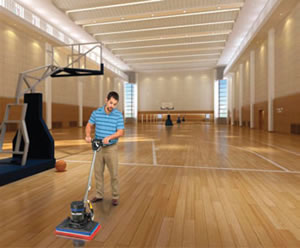 The summer months are the busiest time of the year when it comes to refinishing floors, especially for educational facilities. But as anyone that has ever refinished floors knows, the job can be long and arduous.
One of the most difficult and time-consuming steps in refinishing floors is ensuring that all the finish and soil buildup along the edges of the floor, in corners and in hard-to-reach areas is removed. But it is a job that must be performed in order for the floors to have a clean, even shine.
Because this particular step is so necessary and so difficult, following is information on the different ways to strip edges and corners clean. Refinishing pros recommend the following techniques:
- Scrub the edges using a scrubbing pad or razor scrape and chemical stripper. Wear gloves and goggles, make sure the area is well ventilated and properly dilute the stripper before use. Allow for proper dwell time, then thoroughly rinse all surfaces clean.
- Use a “paddle stick” with a scrub pad along edges and in corners to agitate the stripper and loosen the finish and soils, then rinse clean.
- If using a rotary buffer, apply more pressure to edges by pushing down on one side of the handle and pulling up on the other while carefully maneuvering the machine as it moves along the edge. This technique can be effective, but requires considerable skill and experience to perform correctly.
- Use an “orbital” floor machine; these systems have a rectangular design, so they can fit comfortably into edges and corners. Walk the machine slowly along the edge for thorough cleaning and agitation. Some systems have optional weights that can increase downward pressure for more effective edging.
“When it comes to floorcare, it’s the details that make the difference,” says Debby Davis, product manager for Powr-Flite and a floorcare expert. “Ensuring the edges and corners are properly stripped, cleaned and finished is the difference between a good job and a bad job.”
This article originally appeared in the issue of .