Puerto Rico High School Re-Envisioned Following Hurricane
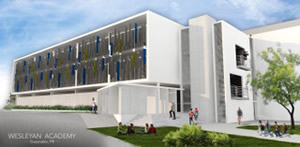
Wesleyan High SchoolWith the intention to integrate building design techniques and technologies that not only comply with needs, but also respond to the human experience, building life cycle and operational efficiency, Fosis Corp. has started a new project which will re-create Wesleyan Academy's high school building.

Along with many other buildings in Puerto Rico, the Academy high school building was destroyed due to Category 5 hurricane Maria. Consequently, Fosis proposed a project to respond to the needs of high school staff and students.

Fosis cofounder and Principal Designer, Carlos Martinez Alfaro, explained "the project aims to relate with the day-to-day life of the student. Our intention is to achieve a space that stimulates learning and creates a sense of identity."

The design intends to promote natural light and ventilation, and scheme spaces that will adjust to students and the administration while integrating the existence gym facility with the new construction.

Designing a building that creates a unique identity while respecting the campus scale and administrative vision and helps create multidisciplinary integration are major goals of the new project. Nevertheless, the design seeks to provide an enriching student life experience, increase student retention and loyalty while attracting new students.

With an initial investment of $1.5 million, the construction is expected to begin in January 2018 and be completed by August 2018.

Featured

  • Building Beyond Simulation: Creating Immersive Ecosystems for Healthcare Education

    Health sciences education is one of the fastest-growing facility types in colleges and universities. The demand for medical, nursing, and allied health professionals is driving the creation and renovation of medical simulation training facilities that provide students with real-world experience through advanced simulation-based learning.

  • Q&A: How to Prevent Kitchen Grease Fires in Commercial Kitchens

    School cafeterias and university dining halls serve thousands of meals daily, relying on high-heat equipment like fryers, grills, and ovens. While these operations keep students fed, they also generate significant grease-laden vapors. Without proper controls, this grease becomes a silent fire threat. As a certified exhaust cleaning specialist and business coach who has helped hundreds of institutional facilities achieve NFPA 96 compliance, I emphasize that proactive grease management isn’t optional; it’s a core fire/life safety practice.

  • Washington State University Debuts New Engineering Hall

    Washington State University recently celebrated a dedication ceremony for the new Schweitzer Engineering Hall on its Pullman campus in Pullman, Wash., according to university news. The facility measures 66,288 square feet, and its completion marks the first milestone in a larger university effort to modernize the engineering and design district.

  • Back-to-School Playground Safety: 7 Common Hazards to Look for After Summer Break

    As summer break comes to an end, school administrators have plenty to prepare before students return. While classrooms, hallways and common areas often receive attention during all the back-to-school preparations, the playground should not be overlooked. Months of weather exposure, storms, and regular wear can leave behind hazards that may not be immediately noticeable.