Going to Bat for School Safety
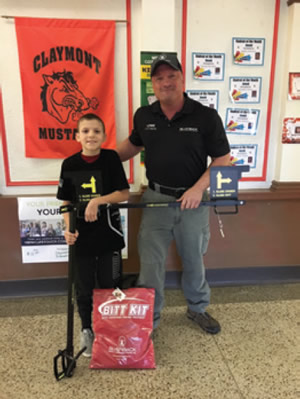
Kohlton Calvey is in the process of raising over $2,000 to purchase 16 Barracudas to help keep his school safer.
When a police raid at a nearby home triggered a lockdown at Clayton Intermediate School in Dennison, Ohio, Kohlton Calvey saw fear in the eyes of his classmates and knew he needed to respond. Now, the 10-year-old fourth-grader is raising money and taking measures to ensure the safety of his peers and help them find comfort in threatening situations.
Calvey recently outlined a request to the Claymont City School Board to purchase easy-to-use mechanisms that improve door security against unwanted trespassers. The Barracuda, a device invented by SWAT team member Troy Lowe and offered by The BILCO Company of Connecticut, is designed to lock down virtually any commercial door in emergency situations. The safety device is available in different models to protect doors that swing both inward and outward, and is adjustable to fit on varying door widths.
“After the lockdown, my mother and I were looking on the Internet and what I liked about it was that it’s easy to use,’’ Kohlton says. “I liked the demonstration in the video.”
Kohlton is seeking to raise nearly $2,000 to purchase 16 Barracudas, one for each room of the school. He had raised $673 and has several more fundraising ideas planned, such as a bake sale and a school-wide “Hat Day” where students can contribute. He has also received private donations and hopes to receive some funds from a school dodge ball tournament.
Zurcher says interest in The Barracuda developed after police raided a house a block from her son’s school. Administrators placed the school on lockdown. “I could see whenever we went on lockdown, my classmates would get nervous,’’ Kohlton says.
The Barracuada features heavy-duty steel construction and a durable powder coat finish. The product can be transferred easily between different access points.
www.bilco.com
This article originally appeared in the School Planning & Management April 2018 issue of Spaces4Learning.