Five Steps to Clean More with Less
 Cleaning equipment selection is becoming ever more important for facilities managers as North America's colleges and universities grapple with flattening operating budgets.
A 2015 study by Sightlines, a consulting firm that serves higher education facilities managers, found that expenditures for college and university facilities operations, including maintenance and custodial services, increased only seven cents per gross square foot (GSF) from 2012 to 2014. The study also found significant increases in custodial staff coverage rates. Since 2009, the average maintenance worker is covering an additional 6,000 GSF of building space, which is attributable to the addition of more buildings on campuses, staffing reductions or both.
"Cleaning larger and larger spaces is the new reality for higher education facilities managers," notes Brad Hoare, product manager for Sanitaire. "Our challenge as manufacturers is to provide clients with equipment that allows crews to clean more square footing per hour and work comfortably."
To meet the challenges of cleaning more space with scarce resources facilities managers should consider going green.
- Machine life: Determine the machinery's cost of ownership. Product warranties offer some guidance. Examine the warranty period and determine the number of hours the machine will be used during that span. Also look for machines that are easy to maintain. Every minute it takes to change vacuum bags, brushrolls and filters is a minute the machine is out of service. Look for equipment with easy access compartments to replace disposables or remove clogs. Also consider products that assemble quickly and without the use of tools.
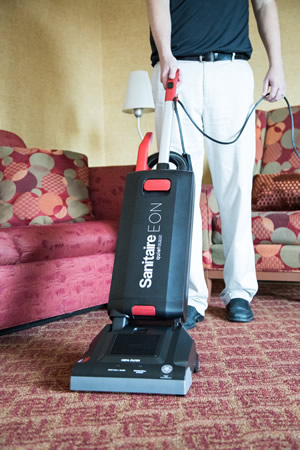 Worker comfort: The weight and maneuverability of equipment plays a key role in minimizing stress and maximizing the productivity of cleaning crews. Ergonomic design that shifts weight from the handle to the base of the machine helps crews operate productively and with less musculoskeletal stress.
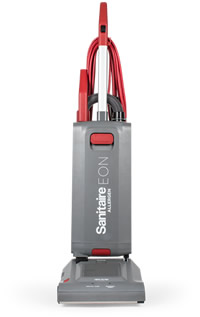
 - CRI Certification: Look for equipment that has earned the Carpet and Rug Institute (CRI) Seal of Approval. This certification rates machines for soil removal capabilities, dust containment and their impact on carpet appearance and wear. The Sanitaire EON™ QuietClean® holds the CRI's gold rating and it emits only 69 decibels of operating sound, so it meets green cleaning standards of the U.S. Green Building Council's LEED program.
- Machine capacity: Consider machines that are built to cover more area more quickly, such as wide-area vacuums that can clean up to a 28-inch path, or backpack vacuums that can speed area cleaning or above-the-floor cleaning.
- Air Quality: Did you know 30 percent of American adults and 40 percent of students suffer from respiratory allergies or asthma? This causes them to miss tens of thousands of days of work and school each year. If your educational facility is located in areas prone to high-levels of air allergens during key seasons, consider a machine that is certified by the Allergy and Asthma Foundation of America. Sanitaire’s EON™ ALLERGEN helps reduce exposure to allergens and irritants, provides increased environmental control and withstands routine cleaning and care.
Sponsored by: Sanitaire