Furniture That Supports Movement-Friendly Learning
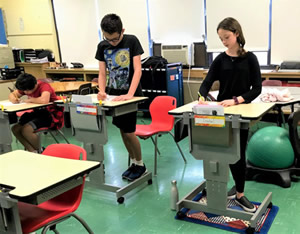
The Focus Desk helped students at the Hyde Park Day School take control of their learning and overcome challenges in the classroom.
The Hyde Park Day School (HPDS) in Illinois provides a specialized environment for intelligent children in grades two through eight also are challenged by ADHD, dyslexia, language disorders, and other conditions. An important accommodation for their students is encouraging movement during class time. Quiet standing, shifting weight, and stretching provide sensory feedback, helping children access working memory and stay on task.
HPDS was contacted by The Marvel Group’s Nancy Dellamore, a school parent, with an idea for furniture to support a movement-friendly setting: a desk with child-operable adjustability, allowing students to self-regulate their need to move without interrupting the teacher. The desk would also address “wish list” items from teachers to support organization, versatility, and comfort.
Over the course of 12 months, The Marvel Group’s product design team worked with HPDS faculty and students on prototypes. The final version, The Focus Desk, met the school’s goals with targeted design elements, including: A silent child-operable lift system, an expandable desk workspace, integrated study carrel walls lockable casters and dedicated on-board storage spaces.
Within a year, all classrooms at HPDS were fully equipped with Focus Desks. Teachers and students at HPDS have enthusiastically embraced the desk’s benefits.
According to teacher Erin Jacobson, “The desks allow for the flexibility our students need. At any given moment in my classroom, some students are standing, sitting, using the privacy folders, utilizing the extender to hold their learning tools, or rolling desks around to rearrange for group seating during projects. It’s hard to imagine ever transitioning back to a more traditional desk style.”
www.marvelgroup.com
This article originally appeared in the School Planning & Management July/August 2018 issue of Spaces4Learning.