Designs Unveiled for Ohio High School

Designs for the new Fremont Ross High School in Fremont, Ohio were unveiled recently for public viewing. The new facility, designed by TDA Architecture, and is slated to feature 29 classrooms, along with a student resource office station and a prominent entry corridor.
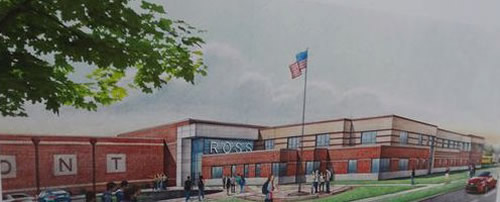
Fremont Ross High School

The new school is one of many proposed upgrades/new constructions in the district. The design and development phase of the project will be completed by September of 2018, with a final completion date of 2021. The current high school facility will remain open during design and construction, and be demolished following the opening of the new high school.

Featured

  • Benson Polytechnic High School in Portland, OR

    Preserving Legacy, Designing for the Future

    As historic academic buildings age, institutions face a difficult decision: preserve and adapt or demolish and rebuild. How do we honor the legacy of these spaces while adapting them to meet the needs of modern learners?

  • Dallas ISD Voters Approve $6.2B Bond Package

    Dallas ISD voters have approved a record-setting $6.2-billion bond package that district leaders say will modernize aging campuses, eliminate portable classrooms and reshape learning environments across one of the nation’s largest school systems.

  • Harvard Announces Replacement Facility for Native American Program

    Harvard University in Cambridge, Mass., recently announced that construction will begin this spring on a new home for its Native American Program, according to university news. The 6,500-square-foot, all-electric building will stand three stories and serve as the central hub for the Harvard University Native American Program (HUNAP).

  • Universities Continue to Launch Multimillion-Dollar Campus Transformations

    What makes the current wave of campus development especially noteworthy is its emphasis on multi-use functionality and community integration. Institutions are no longer investing solely in academic or athletic facilities in isolation. Instead, they are creating destinations that blend recreation, health, housing, and event-driven economic activity.