Athens State University Adds Nureva Audio Systems to Classrooms
Athens State University, located in Athens, Ga., recently installed Nureva HDL300 audio conferencing systems in almost 30 classrooms on campus. As remote learning continues to be the norm during the COVID-19 pandemic, the university found itself updating the technology in classrooms and other meeting spaces around campus to accommodate both in-person and virtual participants. Upgrades included webcams, document cameras, large-screen interactive displays, and most importantly—audio conferencing systems.
After considering products from multiple companies, university officials selected the Nureva HDL300 based on its microphone pickup and background noise reduction capabilities. According to a press release, one system was installed a foot away from a projector fan, and the audio at the remote end came out clean and hiss-free.
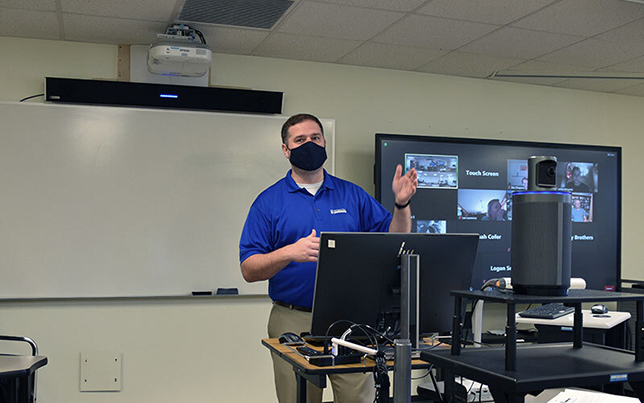
“Nureva’s noise elimination algorithm is vastly superior to all the other products we tested—it doesn’t pick up unwanted noise, and voices are very clear from anywhere in the room,” said Athens State University director of teaching and learning innovation services, David Walker. “The HDL300 is the only system we’ve found that virtually eliminates processing and background fan noise.”
The university has also installed four Dual HDL300 systems in larger conferences spaces. Both products use Nureva’s Microphone Mist technology, which (according to a press release) “fills a room with thousands of virtual microphones that represent individual audio pickup points. No matter how far apart students are in the classroom or which direction they face, a virtual microphone is always close by.” The technology eliminates the need for lapel microphones, podium microphones, or having to physically move closer to the unit in order to be heard.
Nureva CEO Nancy Knowlton said, “We are thrilled that our HDL300 systems are helping remote students at Athens State University receive the same quality of education as the in-classroom students receive.”
About the Author
Matt Jones is senior editor of Spaces4Learning. He can be reached at [email protected].