Hanwha Techwin Expands Multi Sensor Camera Offerings
Hanwha Techwin, producer of IP and analog video surveillance solutions, has expanded its line of multi-sensor cameras that include the Wisenet 7 chipset.
The chipset offers functions like the proprietary Wide Dynamic Range (WDR) technology for Local Contrast Enhancement and Scene Analysis technology, as well as noise reduction technology. These technologies allow the cameras to produce clear images from scenes with a mix of light and dark areas. They also minimize motion blur, increase object definition and sharpness, and offer peace of mind through cybersecurity by embedding unique certificates and encryption keys into each camera.
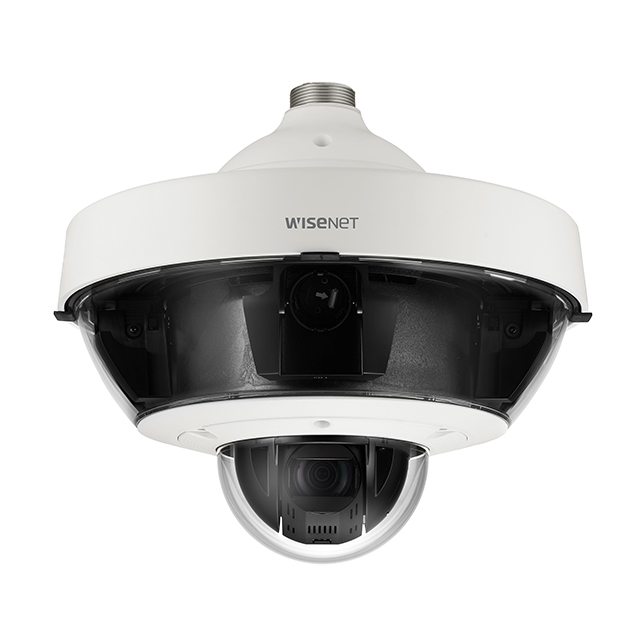
Hanwha Techwin's Wisenet PNM-9322VQP
The new cameras are NDAA-compliant, UL Cap certified, and require only one license in a VSM. Built-in video analytics include motion and directional detection, enter/exit, tampering detection, and line crossing. The cameras also feature H.265 and WiseStream II compression technology and a full suite of the Wisenet 7 analytics.
Some of the new products include:
- 3-Channel Multi-Sensor PNM-8082VT: Offers coverage around corners and either straight ahead or down with a single unit. Sensors capture 2MP HD images with motorized, vari-focal lenses and a maximum field of view of 320°. The camera can be set up either indoors or outdoors.
- Wisenet PNM-9322VQP Multi-Directional plus PTZ Camera: The unit contains four multi-sensor cameras and a fifth PTZ camera capable of a 32x optical zoom. Users can configure the PTZ camera to zoom and track moving objects located by any of the other cameras.
- Wisenet PNM-9022V Panoramic Camera: The product uses alpha blending technology to combine overlapping images from its four HD sensors into a single 8.3 MP, 209° image. It can also create 180° images using the input from two of its camera channels.
Products designed for use in harsher environments (like water treatment or marine settings) and for discreet placement in retail or office settings are also available.
“Having a range of NDAA complaint and UL CAP certified multi-sensor cameras with our powerful Wisenet 7 SoC provides integrators and end users the highest possible value and performance for any video surveillance project,” said Ray Cook, Hanwha Techwin’s Vice President, Products, Solutions, and Integration. “The savings potential extends far beyond the costs of installing individual cameras to also include significantly lower installation, network infrastructure, and license costs as well.”
About the Author
Matt Jones is senior editor of Spaces4Learning. He can be reached at [email protected].