Harlequin Floors Solves Problems for UArts
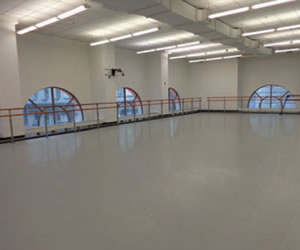
Harlequin Floors provide students at the UArts School of Dance In Philadelphia with a shock-absorbing vinyl surface that is ideal for a wide variety of dance contexts including jazz, contemporary and tap.
Donna Faye Burchfield, director of the School of Dance at University of the Arts in Philadelphia, worked closely with a team of decision makers at the highly-regarded performing arts institution to find the best flooring for their busy dance studios. With more than 300 undergrads in the BFA program in the School of Dance dancing on the UArts floors from 8 A.M. until 11 P.M. nearly seven days every week, they needed floors suitable for many types of dance.
Durability, hassle-free maintenance and safety for their dancers were key factors in replacing their previous flooring, which had become extremely slippery, resulting in complaints from faculty and students. The dean, director, faculty and facilities manager knew Harlequin Floors by reputation and reached out to many other university dance departments for recommendations. Donna Faye Burchfield says, “The decision was a clear one. Upon investigation, all recommendations and research pointed us to Harlequin Floors.”
University of the Arts decided Harlequin’s WoodSpring sprung floors with the Harlequin Cascade vinyl surface was the best flooring solution for their needs. The “spring” in the WoodSpring construction comes from the natural flexing and recovery of the triple layer of battens, which is enhanced by shock-absorbent elastomer pads.
The surface is well suited as a portable or permanent dance floor and is extremely resistant to wear, but provides a perfect “feel” — silky soft without any hint of being slippery. Ms. Burchfield enthusiastically explains, “We would highly recommend Harlequin Floors for their consistent and thorough customer service. UArts School of Dance is thrilled with the new floors, which have made a huge difference in the quality of the dance experience for the entire faculty and the students.”
www.harlequinfloors.com
This article originally appeared in the College Planning & Management November 2013 issue of Spaces4Learning.