The Window of Life
- By Michael S. Dorn
- 08/01/14
The actions and communications by the first campus employee in the first precious seconds of a life-or-death crisis can determine the safety of many people. Police officers are drilled to take immediate action to protect themselves and others before they call for assistance on the radio when they face imminent danger. This precious window of life has significant ramifications for higher education campuses where large numbers of people can be at risk in one incident.
Just as commercial airlines teach us to put our own oxygen mask on before putting a mask on a child or assisting others, we should be training campus employees and students to take actions to protect themselves so they can in turn be capable of helping others. We should also be emphasizing to campus staff members the need to quickly take actions to help campus officials initiate protective actions for entire buildings and campuses.
Know What to Do and When to Lockdown
I have worked a number of campus shootings where protective actions were delayed because employees called 911 before they took a few seconds to take action to help protect the entire campus. For example, in one campus shooting incident, more than 100 law enforcement officers were on the campus before a lockdown was implemented. The 911 operator kept an employee on the phone for more than 20 minutes, and neither thought to initiate a lockdown of the campus. Had this incident been an active shooter situation, thousands of staff members and students would have remained unprotected for several precious minutes before officers began arriving.
Of course, these steps are not set in stone. There may sometimes be a better way of handling a situation. For example, if there are two staff members in the front office when they see a potentially dangerous situation, one can call a lockdown while the other begins the process of calling 911. And if the school has an SRO, this step might be performed simultaneously with one of the earlier actions because of the officer’s proximity.
The Window of Life is an approach that can help people better understand how to make notifications and take protective actions in the correct order for various types of incidents. Available as a free downloadable poster, the Window of Life is based on proven training approaches for public safety officials for several decades and is also easy to understand and apply.
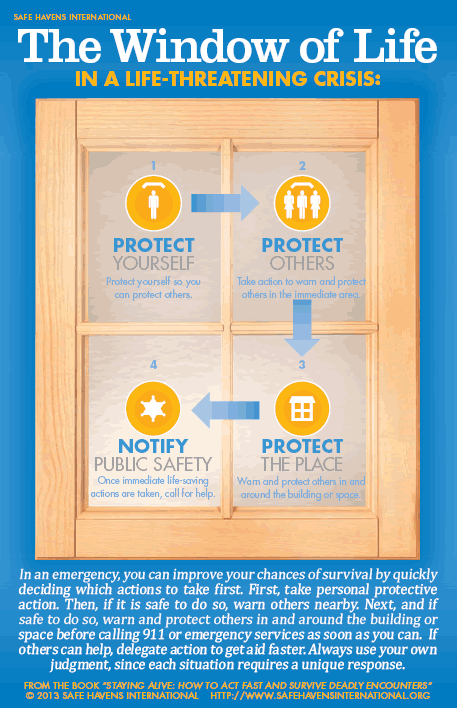
A poster for your staff lounge and break areas: This infographic was designed to accompany the book Staying Alive: How to Act Fast and Survive Deadly Encounters and is available as a free download at SafeHavensInternational.org – along with more than one hour of video content on the topic.
This article originally appeared in the issue of .
About the Author
Michael S. Dorn has helped conduct security assessments for more than 6,000 K-12 schools, keynotes conferences internationally and has published 27 books including Staying Alive – How to Act Fast and Survive Deadly Encounters. He can be reached at www.safehavensinternational.org.