Safe Steps for Students
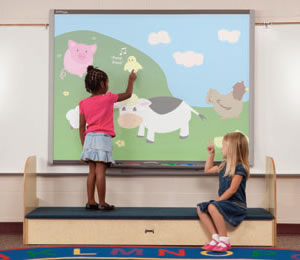
The iRise step helps students reach high places easily and safely.
With an increase in interactive whiteboards in the classroom, educators are finding that many of these boards are not typically installed at the correct height for young students. With no dedicated options to solve this problem, teachers often turn to using chairs and other items that are often unstable, unreliable to boost children up to reach the board.
Just ask Jennifer Hansen — a teacher from Marshall, Minnesota — who was looking for a better option to help her youngsters reach high areas of their classroom interactive whiteboard. “We were using two different stools — they were tippy and too big of a step for students to get up and down. They also did not allow students to go from one end of the SMART board to the other if needed. We have students with special needs and safety was one of our priorities. We also needed something reliable and functional that would work in the classroom — and decided on the Jonti-Craft iRise Interactive Whiteboard Step.”
Educators like Jennifer can be assured they are getting the best products possible when purchasing from Jonti-Craft. With kid-tested features like KYDZSafe edges, KYDZTuff finish, and KYDZStrong construction, every product has been designed with children in mind, while addressing the issues educators are most concerned with. “Safety is the biggest area that has been helped with the iRise step. With the help of the handrails, students are more independent getting up and down from the SMART Board. Plus, the depth is perfect — it’s deep enough for students to stand on and not too deep that teachers cannot reach the IWB from floor,” says Jennifer.
When asked if she would recommend the iRise steps to other educators, Jennifer replies, “Yes, definitely! It’s perfect for what we needed and we have always had wonderful customer service and quality products from Jonti-Craft!”
www.jonti-craft.com
This article originally appeared in the issue of .