Better Classroom Security for Safer Schools
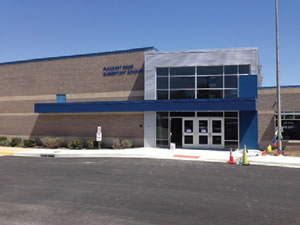
Olathe Public School District made their schools safer
and more secure by replacing multiple brands of locks
on classroom doors with Schlage locks and the Everest
29 key system.
The Olathe Public School
District in Kansas is improving
classroom security and simplifying
key control by replacing multiple
brands of locks on classrooms doors with
Schlage locks and the patent-protected
Everest 29™ key system.
With 40+ schools, the school district
was using key systems from three different
manufacturers, making key control difficult.
Challenges included:
- Limited support and expansion: manufacturers
no longer supported some systems,
while others had reached their capacity.
- Overexposure: Some of the key systems
had been in place so long that it was difficult
or impossible to know who had keys.
- Maintenance: Upkeep was also troublesome
with so many key systems to maintain.
The district wanted to implement door
hardware products and a consistent key
system across the district that allowed
for increased control and more effective
maintenance.
The school district chose Schlage
mortise and cylindrical lock products and
a patent-protected Everest 29 key system
because of its many benefits, including:
- Patent protection: The key system provides
patent protection against unauthorized
duplication through 2029, so the
district will be able to maintain effective
key control with confidence.
- Ease of rekeying: All locks are Schlage
with full-size interchangeable cores, which
simplify rekeying.
- Classroom security functionality: The Schlage L-Series mortise locks and
ND-Series cylindrical locks used include
a classroom function that allows teachers
to lock the door from within the classroom
during an incident.
Most of the locks being upgraded are on
classroom doors, the district also is replacing
locks on other openings.
www.allegion.com
This article originally appeared in the issue of .