Johnson County Community College Classrooms
Functional Color Solutions, LLC
Project of Distinction 2017 Education Design Showcase
Project Information
Facility Use: 2-Year Institution
Project Type: Renovation
Location: Overland Park, KS
District/Inst.: Johnson County Community College
Chief Administrator: Rex Hayes, associate VP
Completion Date: January 2017 (ongoing)
Gross Area: 1,800,000 sq. ft. (campus-wide)
Area Per Student: 20 sq. ft.
Site Size: 245 acres
Current Enrollment: 19,139 students
Capacity: 34,000 students
Cost per Sq. Ft.: $25.20
Total Cost: $94,500
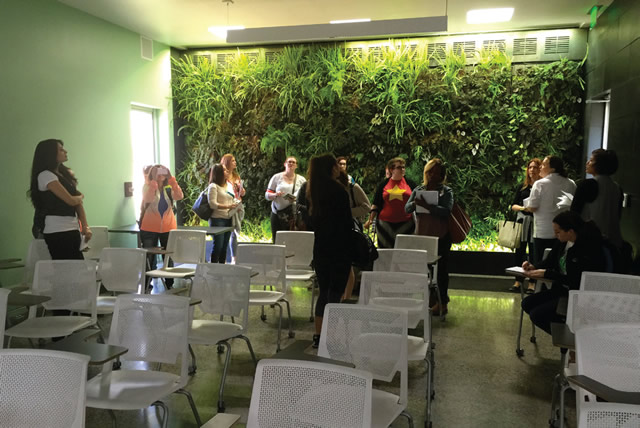
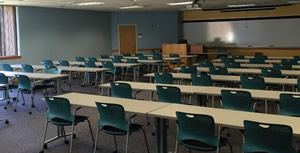 Johnson County Community College (JCCC) campuswide color design project for classroom and lab environments implements evidence based design research, which incorporates strategic selections of three wall paint colors and their correlating shadeaccents for teaching walls. Hue selections promote psychological and physiological benefits, which better assist in the conduction of learning, operation of tasks, and promotion of optimal behavior patterns, while enriching occupant well-being.
Each paint color is selected for its individual energy properties derived from extensive color research, while abiding with Illuminating Engineering Society’s LRV guidelines for academic settings. Sustainable practices with lower maintenance requirements and no-VOC paint are continually practiced.
 No additional costs for materials or labor are incurred due to the paint color change. Current to date: 63 of the 270 classrooms and 124 labs are completed (37,800 square feet) with an ongoing renovation schedule for additional spaces each year.
The innovative color design strategy collaborates with JCCC’s Mission Statement and Strategic Plan to inspire learning, increase student success and implement excellence and innovation in classroom environments. The results are positive impact on health, behavior, and emotion; better attendance; more productive and accurate student and employee performance; increased positivity in morale and heightened sense of pride within JCCC and the surrounding community.
Judges Comments
A basic project with a sizeable impact for the college.
 Architect(s):
Functional Color Solutions, LLC
KATHRYN GRUBE, MID, NCIDQ, LEED-AP
803/528-6165