Secure Campus Access Made Easy
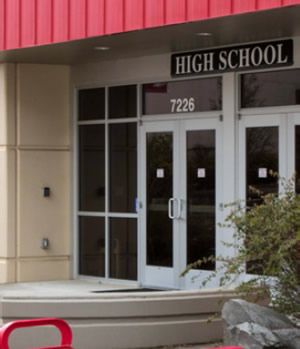
Santiam Christian Schools were experiencing two major problems: key control and liability issues amongst the student body. The CyberLock system helped mitigate the impact of both issues.
Nestled In CyberLock’s backyard is Santiam Christian Schools, a private organization where students K–12 cultivate an academic environment that, “encourages the development of a Christian world-view emphasizing academic excellence, Christian character, responsible citizenship, and service to others.”
Santiam Christian Schools were experiencing two major problems: key control and liability issues amongst the student body. With a large number of master keys in circulation, and no ability to track student or faculty access, students were entering unsupervised rooms such as the weight rooms and outdoor sports facilities. Without a system for controlling access on the campus, doors were consistently left open and equipment would leave designated areas. Santiam Christian initially looked to re-key these areas but quickly discovered it was far too costly for a private school. Fortunately, Santiam Christian looked to nearby CyberLock for an affordable access control system that protected the student body and provided complete access control throughout the entire campus.
Using CyberLock, Santiam Christian secures interior and exterior access to all its critical access points, including gyms, kitchen, weight rooms, storage room, and community areas. Currently, 60 CyberKey smart keys are in circulation and Bryan Twedell, director of Maintenance, knows exactly who has these keys and which doors they can access.
“The biggest benefit of the CyberLock system is the controlling and tracking of all key holders,” states Twedell, “as well as the flexibility, as this is not a one-size-fits-all solution.” CyberLock’s cost-effective access control system quickly solved Santiam Christian’s liability and key control concerns.
www.cyberlock.com
This article originally appeared in the School Planning & Management April 2018 issue of Spaces4Learning.