Edison State Breaks Ground on Student Career Center

Edison State Community College in Piqua, OH, recently broke ground in preparation for the construction of the Robinson Student Career Center. The new facility will allow students to work with local business and industry leaders as part of their Edison State education. The Center will be constructed as an addition to the West Hall building of the college.
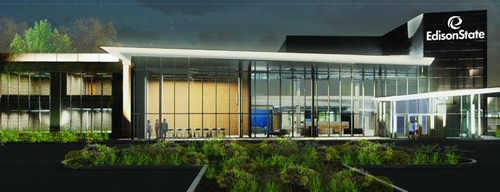
Edison State

Construction on the Robinson Student Career Center is planned to begin in the 2018 academic year, with a projected completion date sometime in the fall of 2019.

Featured

  • Round Rock ISD Completes New Early College High School

    Round Rock ISD near Austin, Texas, recently announced that construction is complete on a new, 46,500-square-foot campus for Early College High School, according to a news release. The new facility will allow the school’s students and staff to move from portables into a permanent building and increase its enrollment to 500.

  • Stanford Completes Construction on Graduate School of Education Facility

    Stanford University in Stanford, Calif., recently announced the end of construction on a new home for its Graduate School of Education, according to a news release. The university partnered with McCarthy Building Companies on the 160,000-square-foot project, which involved two major renovations and one new construction effort.

  • LSU Breaks Ground on $200M Residential Project

    Louisiana State University in Baton Rouge, La., recently broke ground on a new residential complex, according to university news. The South Quad residential project will consist of two buildings and add a total of 1,266 beds for freshmen students. The development comes with a price tag of $200 million, and it’s scheduled to open to students in fall 2027.

  • Different Starting Points, Same End Goal

    Higher education campuses can enhance student experience by implementing mobile credentials to streamline building access, on-campus payments, and access to other amenities. This enables students to connect to their campuses through the technology they use most: their mobile devices.