Boston Public Schools Unveils New STEM Early College Academy

The new $73 million Dearborn STEM 6-12 Early College Academy recently celebrated a ribbon cutting ceremony, and prepares to welcome students for the new school year. The Academy, the first new school construction project for Boston Public Schools in 15 years, is designed to support learning for computer science and engineering, health, and life sciences subjects.
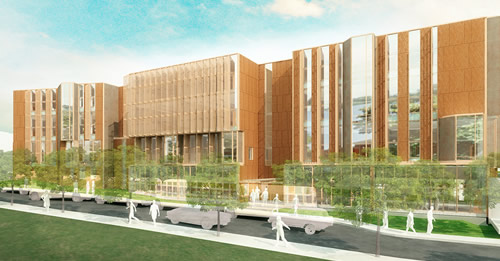
Dearborn STEM Academy

Dearborn features indoor and outdoor learning classrooms, two fabrication labs, a dance studio, 3D printers, and a large media center. The academy will initially serve 488 students, but is designed to accommodate 600 students by 2020. The Dearborn Academy took just over six years to plan, design, and build.

Featured

  • Pitzer College

    Designing for Change in Higher Ed Learning Environments

    Higher education will continue to evolve, and learning environments must evolve with it. By prioritizing adaptable infrastructure, thoughtful reuse, strong energy performance, and wellness-centered design, campuses can create spaces that support learning today while remaining flexible for the future.

  • golden trophies with falling confetti

    Spaces4Learning Launches 2026 New Product Awards

    Spaces4Learning is happy to announce that we’re now accepting entries for the 2026 New Product Awards! The awards program recognizes the outstanding product development achievements of manufacturers and suppliers whose products or services are considered particularly noteworthy.

  • University of Oklahoma Announces New Campus Master Plan

    The University of Oklahoma in Norman, Okla., recently announced that it will soon launch a new, comprehensive Campus Master Plan to guide the campus’ physical development during the next decade, according to a news release.

  • Can AI Help Build Stronger Communities in Student Housing?

    Student housing success is shifting from operational performance to student experience, with belonging now at the center. A recent 2025 report underscores a growing emphasis on student well-being, community, and engagement, signaling that expectations now extend beyond logistics to ensure students feel supported in their living environments. AI is enabling that shift by reducing administrative workload and giving teams more time to focus on meaningful student engagement.