New Technical Campus for Collin College

Officials broke ground earlier this month on the Collin College Technical Campus in Collin County, TX, a 340,000-square-foot career and technical education facility dedicated to instruction in high-demand, high-wage workforce areas.
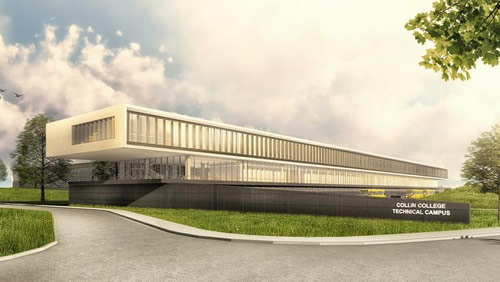
Collin College Workforce

Scheduled for a fall 2020 opening, the three-story campus will offer programs in automotive service and repair, construction, health care, information technology and manufacturing, as well as general academic classes, student support services, green spaces, cooperative project areas and covered parking. It will serve up to 7,100 students.

Designed with the input of local professionals in each program’s career field, the campus will prepare students to enter the job market with current training on the equipment they will use in their industry.

Featured

  • LSU Breaks Ground on $200M Residential Project

    Louisiana State University in Baton Rouge, La., recently broke ground on a new residential complex, according to university news. The South Quad residential project will consist of two buildings and add a total of 1,266 beds for freshmen students. The development comes with a price tag of $200 million, and it’s scheduled to open to students in fall 2027.

  • North Texas School District Completes Third New Elementary School

    The Denton Independent School District in Dallas, Texas, recently finished construction on its third prototype design elementary school, Reeves Elementary, according to a news release.

  • Utah Valley University Opens New Engineering Building

    Utah Valley University in Orem, Utah, recently held a grand-opening ceremony for the new Scott M. Smith Engineering Building, according to a news release. The facility is one of the largest engineering buildings in the state at almost 200,000 square feet, and it plays home to the university’s Smith College of Engineering and Technology (SCET).

  • Pitzer College

    Designing for Change in Higher Ed Learning Environments

    Higher education will continue to evolve, and learning environments must evolve with it. By prioritizing adaptable infrastructure, thoughtful reuse, strong energy performance, and wellness-centered design, campuses can create spaces that support learning today while remaining flexible for the future.

Digital Edition