No More 'Shhhh!' The Library of Today and the Future
Our culture has changed. Your community has changed. Has your library changed yet?
- By Todd Bushmaker
- 08/20/19
Owing to the need for multi-purpose and breakout spaces in schools, changing paradigms in student learning, increased use of e-books and other technology and a growing desire for community engagement, school libraries are making a shift.
As you consider creating your modern library, let design, function and technology create the best space for your constituents.
By the People, for the People
What do your teachers, students, and communities need and desire? Redefining and redesigning your current library — or designing a new one, based on the insights gained from surveys, focus groups and interviews — should be an exciting prospect that sets the tone for a library with a new vision and purpose.
While every community can benefit from a publicly responsive school library, it is especially important for rural and low-income urban areas. These districts and communities often express appreciation for libraries that offer access to computers, GED or technology courses, Internet, videos, and teaching tools. They also value low- or no-fee meeting space that bring like-minded groups together.
Design for Maximization
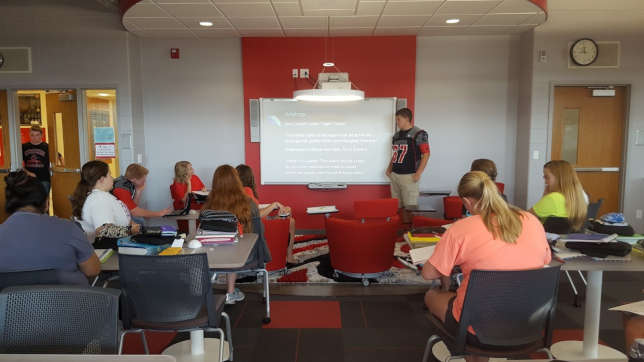
Informed decisions about natural lighting, colors, furnishings, lighting fixtures, flooring and ceiling treatments, technology and writable surfaces will set the tone for space that is alluring to many. Seek to provide seating arrangements and furniture to accommodate different sizes, situations and group dynamics. Being capable of obliging many types of functions and sizes of groups can make your library a preferred destination. Wedge-shaped tables provide the option to be separated for individual activities or grouped into numerous formations for teams of nearly any size. Wheels will be your ally for chairs, bookshelves, video monitors and whiteboards as you adapt the space to the precise needs of the diverse users.
The days of the school library being the quiet zone are essentially over, but there’s still a need for concentration. Look for creative ways to allow individuals to engage in focused, uninterrupted learning while providing space for group activities and interactions.
It is commonplace for students to use their tablets, laptops, or phones for research, so make it easy for them to stay powered up. This decreases frustration and distraction while also giving them another reason to use the library space and resources. Additionally, make sure your network WiFi is robust and high-bandwidth to accommodate students’ technology needs.
Library spaces can support media labs, music and video production studios, application-focused computer labs for photo manipulation or website design, video conferencing, and more. If your school has a need for makerspace (a collaborative zone used for creating, learning, exploring and sharing), your next library might be perfect for supporting STEM (science, technology, engineering, and math) initiatives and community clubs.
Communication for Utilization
Communicating a contrast between the library of years gone by and today is vital. In many instances, even the titles of staff members have changed from librarian to media specialist. Be certain your teachers realize how your library has changed, and then convey the new mindset and focus to students and parents. If your school is a resource to the community, offer open houses while also engaging groups such as the PTO, booster clubs, continuing education providers, Kiwanis, Rotarians and other civic organizations that will circulate the message.
But, also be sure to consider the different audiences that you have frequenting your space. Does your space “sell” learning and development specifically for them? Make adjustments based on your audience, even if that means altering the space throughout the day. For example, if a humanities class is coming to engage with an author via Skype, be sure that items on monitors and the books being displayed are of interest to that group of students. This will create enthusiasm that can be organic.
Your Modern Library
The Darlington Community School District in Darlington, WI, is a great example of a library that is efficient, engaging, and evolving. School staff, district leaders, and community members listed the library/media/technology center as a critical component of the master plan to improve their school campus. As a result of their vision, a dim, non-descript, old-school institutional library was transformed to a bright, lively, multi-purpose space that students and staff are flocking to for a wide range of purposes.
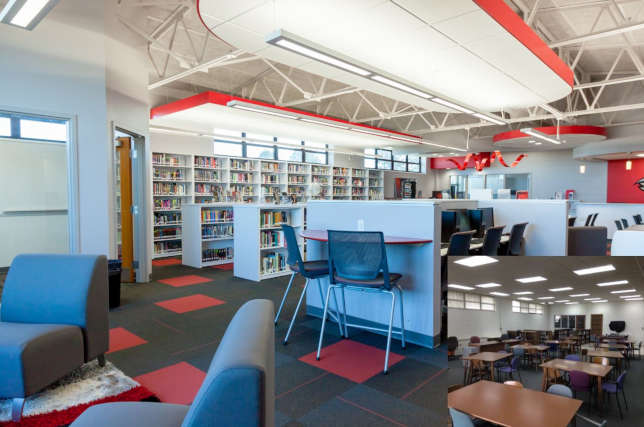
Schools don’t automatically need to completely reinvent their library space; a fresh coat of paint, new exciting furnishings, creation of collaboration zones and a mindset focused on innovation can go a long way toward effectively impacting your students’ learning and the local community you serve!
This article originally appeared in the July/August 2019 issue of Spaces4Learning.