University of Hawai’i Law School Dedicates New $9.3M Clinical Building

HONOLULU, HI – The William S. Richardson School of Law at the University of Hawaiʻi at Mānoa (UH Mānoa) dedicated its new clinical building on September 6. The celebration capped a 15-year quest to provide an essential space for practical training for law students while simultaneously serving members of the community in need of access to justice.

The $9.3 million project—which included more than $2 million in philanthropic funds—was a combined effort of the law school, UH Mānoa administrators, donors, and the state Legislature.
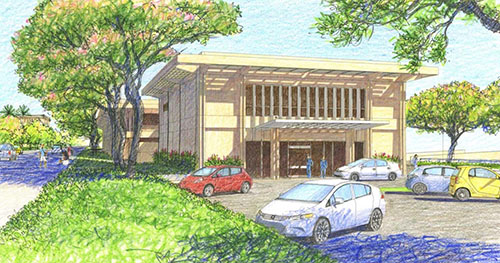
University of Hawai’i Law School 500

The building was built in a portion of the existing Law School parking lot, an area designated in 2008 for expansion in the UH Mānoa Long-Range Development Plan, and is attached to the current Law School building by a second-floor bridge.

The Law School has long needed additional space for its clinical programs that offer hands-on training for law students working with real clients. The Richardson programs are popular with students, and have been singled out nationally for their high quality and innovation.

Featured

  • Geometric abstract school illustration

    How Design Shapes Learning and Success

    Can the color of a wall, the curve of a chair, or the hum of fluorescent lights really affect how a student learns? More schools are beginning to think so.

  • Beyond Four Walls

    Operable glass walls provide a dynamic solution for educational spaces. They align with today’s evolving teaching methods and adapt to the needs of modern learners. Beyond the functional versatility, movable glass walls offer clean, contemporary aesthetics, slim and unobtrusive profiles, and versatile configurations that cater to the evolving needs of students and educators alike.

  • UCNJ Launches $30M Modernization of Physical Education Center

    The Union College of Union County (UCNJ) in Cranford, N.J., recently broke ground on a new $30-million modernization project for its Physical Education Center (PECK), according to a news release. The college partnered with DIGroup Architecture for the project’s design, transitioning the existing 42,000-square-foot structure into a campus hub for student athletics and campus life.

  • Different Starting Points, Same End Goal

    Higher education campuses can enhance student experience by implementing mobile credentials to streamline building access, on-campus payments, and access to other amenities. This enables students to connect to their campuses through the technology they use most: their mobile devices.

Digital Edition