University of Minnesota Pioneer Hall Design Wins Grand Award

SAINT PAUL, MN – The University of Minnesota’s Pioneer Hall expansion and renovation project received a Grand Award at the recent American Council of Engineering Companies of Minnesota’s 53rd Engineering Excellence Awards banquet.

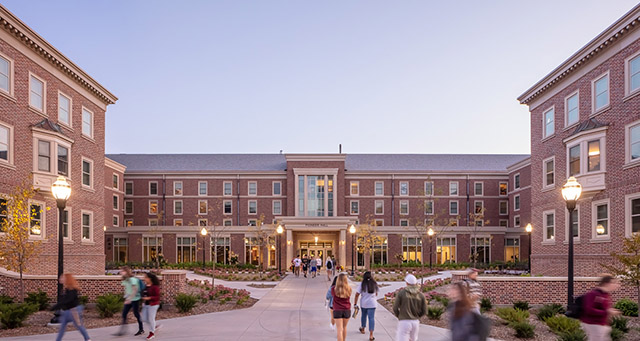
TKDA, an employee-owned provider of engineering, architecture and planning services, led engineering and architecture design services on the project, collaborating with KWK Architects of St. Louis, the project design architect. The team transformed the 90-year-old Georgian Revival-style residence hall in the university’s Superblock district into 18 vibrant student communities while preserving a significant amount of the historic building’s exterior. McGough Construction was the construction manager at risk for the $104.5 million project.
University of Minnesota Pioneer Hall 640

The campus building design for the Pioneer Hall renovation created quality housing and supportive spaces and a dining area to enhance the first- and second-year student experience. Multipurpose and recreation rooms and a mix of study areas and social interaction spaces promote social engagement, one of the key factors in academic success and student retention, particularly among first-year students.

A newly constructed 850-seat dining area at street level accommodates all Superblock residents and is also open to the public. The number of beds increased from 693 on four floors to 756 beds on five floors. The overall building size increased by more than 40 percent.

The annual ACEC/MN gala recognizes engineering firms and their clients for successful projects that demonstrate ingenuity and a high level of accomplishment and that are of value to the community.

Featured

  • University of Tennessee at Chattanooga Launches New Emergency Communications System

    The University of Tennessee at Chattanooga (UTC) recently deployed a new emergency notification and incident management system for its campus, according to a news release. The university partnered with 911Cellular to launch Safe@UTC, a smartphone app allowing university officials to communicate and respond during emergency situations.

  • Spaces4Learning Trends & Predictions for Educational Facilities in 2026: Part II

    As education leaders look toward 2026, the design of K–12 and higher education facilities is being reshaped by powerful, converging forces. Survey respondents point to the rapid growth of Career and Technical Education, deeper alignment with workforce and industry needs, and the accelerating influence of AI and emerging technologies.

  • University of Arizona Approves New Residence Hall

    The Arizona Board of Regents recently approved plans for a new residence hall at the University of Arizona in Tucson, Ariz., according to a news release. The new facility is scheduled to open in fall 2028 and have the capacity for more than 1,200 students, enforcing a new university expectation that all first-year students live on campus.

  • How a Portable Sink Helped an Art Classroom Run More Smoothly

    Classroom design decisions can have outsized effects on instructional time and safety at schools juggling mismatched infrastructure, strict budgets, and crowded schedules — particularly in the arts. Between spilled paint and dirty brushes, art classes run smoother with a sink in the studio. But many schools don’t have a sink in every art classroom.