Northwestern Athletics Add Filtration Systems

As part of a phased ramp-up in its return to full operations, Northwestern University Athletics and Recreation has installed filtration systems in the locker and weight rooms and other high-traffic spaces in its athletic facilities. The institution has acquired several PuraShield Smart 1000 Cabinets from Purafil.
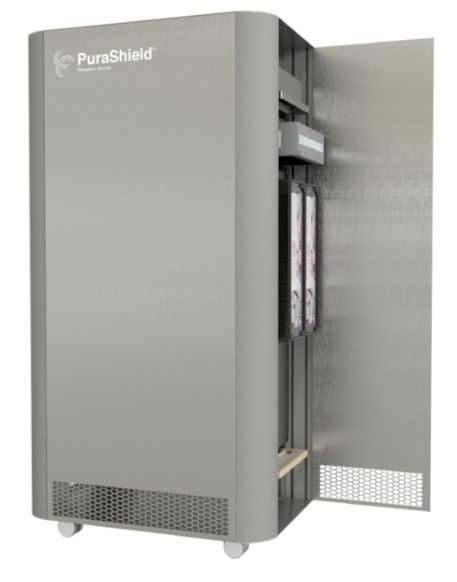
Northwestern has acquired several PuraShield Smart 1000 Cabinets from Purafil.

According to the company, the system removes "99.99 percent" of aerosols carrying viruses and bacteria from the air. The goal: to improve indoor air hygiene. The technology is purported to clean up to 50,000 cubic feet of space in 60 minutes. The cabinet holds 50 pounds of molecular filtration media. The cabinet design allows the unit to be rolled into areas where it's needed.

"Throughout the process of planning for the return of our campus community, the health and safety of Northwestern student-athletes, coaches and staff have guided every decision," said Marcus Attles, associate athletic director for facilities and operations, in a press release. "As part of our mission to create a safe indoor environment, we chose PuraShield filtration systems for their highly effective particle capture rates, the incredible amount of filtration technology within each unit and layers of proven technology. We are utilizing the technology in multiple on-campus spaces, providing high traffic areas with a significant layer of localized filtration so that our Wildcats can breathe a little easier knowing these safeguards are in place."

Purafil is a division of Madison Industries, which specializes in filtration, safety, energy and industrial solutions.

About the Author

Dian Schaffhauser is a former senior contributing editor for 1105 Media's education publications THE Journal, Campus Technology and Spaces4Learning.

Featured

  • Surging Demand for Student Housing Fuels Major Campus Investment Opportunities

    University leaders throughout the U.S. are accelerating plans to modernize and expand student housing as enrollment stabilizes and demand for on-campus living rebounds. Recent data from the National Center for Education Statistics indicates that total postsecondary enrollment is projected to grow through the end of the decade, with undergraduate enrollment alone expected to increase by more than 8 percent by 2030.

  • Designing for Every Mind

    Learning environments have the power to shape not just what students know, but who they become. When a school is designed with genuine empathy—for the full range of ways students think, sense, and engage with the world—it becomes more than a building. It becomes a catalyst for growth, confidence, and belonging. That is the animating idea behind neurodiverse design, and it is one that is transforming how more architects and designers are thinking about school design.

  • Myrtle Grove Elementary

    Phased Construction Keeps Students on Campus During Rebuild

    When Escambia County School District needed to replace most of Myrtle Grove Elementary School in Pensacola, Fla., it had three distinct challenges: honor the school's legacy in the community, bring state-of-the-art learning environments to the county, and be seamlessly built on the same site as the active school campus.

  • school building with glowing circuit board patterns

    AI Is Coming to Schools — But Most School Buildings Still Run on Institutional Memory

    As school districts race to introduce AI into classrooms, administration, and curriculum planning, another conversation is happening behind the scenes: How prepared are school facilities themselves for the operational demands AI will create?