Northwestern Athletics Add Filtration Systems

As part of a phased ramp-up in its return to full operations, Northwestern University Athletics and Recreation has installed filtration systems in the locker and weight rooms and other high-traffic spaces in its athletic facilities. The institution has acquired several PuraShield Smart 1000 Cabinets from Purafil.
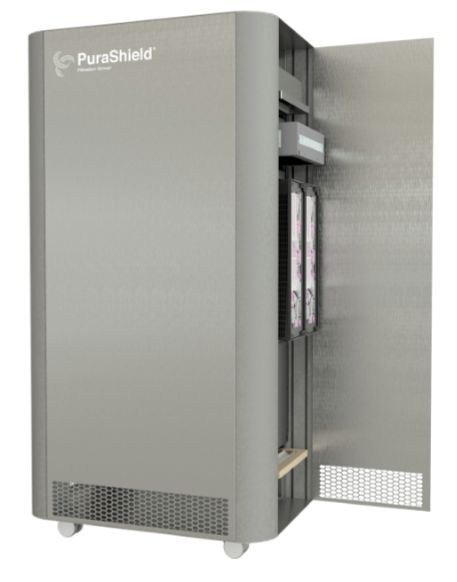
Northwestern has acquired several PuraShield Smart 1000 Cabinets from Purafil.

According to the company, the system removes "99.99 percent" of aerosols carrying viruses and bacteria from the air. The goal: to improve indoor air hygiene. The technology is purported to clean up to 50,000 cubic feet of space in 60 minutes. The cabinet holds 50 pounds of molecular filtration media. The cabinet design allows the unit to be rolled into areas where it's needed.

"Throughout the process of planning for the return of our campus community, the health and safety of Northwestern student-athletes, coaches and staff have guided every decision," said Marcus Attles, associate athletic director for facilities and operations, in a press release. "As part of our mission to create a safe indoor environment, we chose PuraShield filtration systems for their highly effective particle capture rates, the incredible amount of filtration technology within each unit and layers of proven technology. We are utilizing the technology in multiple on-campus spaces, providing high traffic areas with a significant layer of localized filtration so that our Wildcats can breathe a little easier knowing these safeguards are in place."

Purafil is a division of Madison Industries, which specializes in filtration, safety, energy and industrial solutions.

About the Author

Dian Schaffhauser is a former senior contributing editor for 1105 Media's education publications THE Journal, Campus Technology and Spaces4Learning.

Featured

  • Building Beyond Simulation: Creating Immersive Ecosystems for Healthcare Education

    Health sciences education is one of the fastest-growing facility types in colleges and universities. The demand for medical, nursing, and allied health professionals is driving the creation and renovation of medical simulation training facilities that provide students with real-world experience through advanced simulation-based learning.

  • Q&A: How to Prevent Kitchen Grease Fires in Commercial Kitchens

    School cafeterias and university dining halls serve thousands of meals daily, relying on high-heat equipment like fryers, grills, and ovens. While these operations keep students fed, they also generate significant grease-laden vapors. Without proper controls, this grease becomes a silent fire threat. As a certified exhaust cleaning specialist and business coach who has helped hundreds of institutional facilities achieve NFPA 96 compliance, I emphasize that proactive grease management isn’t optional; it’s a core fire/life safety practice.

  • Washington State University Debuts New Engineering Hall

    Washington State University recently celebrated a dedication ceremony for the new Schweitzer Engineering Hall on its Pullman campus in Pullman, Wash., according to university news. The facility measures 66,288 square feet, and its completion marks the first milestone in a larger university effort to modernize the engineering and design district.

  • Back-to-School Playground Safety: 7 Common Hazards to Look for After Summer Break

    As summer break comes to an end, school administrators have plenty to prepare before students return. While classrooms, hallways and common areas often receive attention during all the back-to-school preparations, the playground should not be overlooked. Months of weather exposure, storms, and regular wear can leave behind hazards that may not be immediately noticeable.