Virginia Commonwealth Shows Off New Engineering Research Building — Virtually

Virginia Commonwealth Shows Off New Engineering Research Building — Virtually

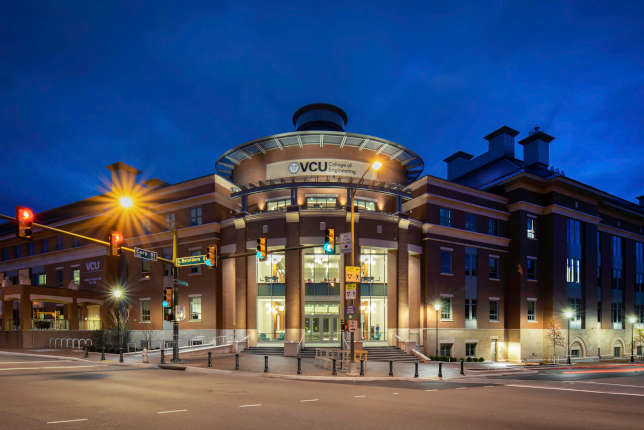
Virginia Commonwealth University's College of Engineering is celebrating the opening of its new Engineering Research Building this week — virtually.

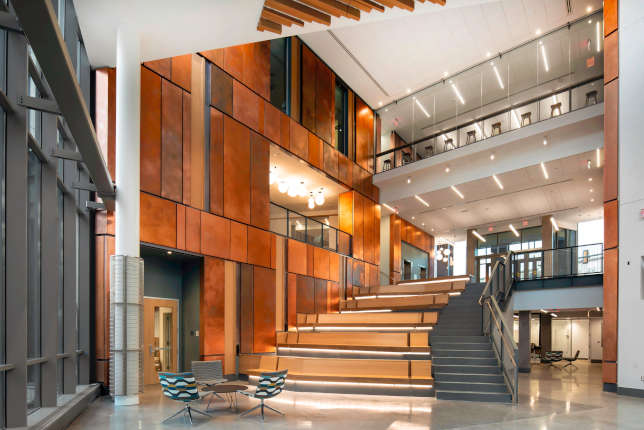
According to the university, the 133,000-square-foot building is intended to support advanced research and economic development initiatives with a design that emphasizes makerspaces, collaborative research facilities and flexible gathering areas. Maker resources will include 3D printing, bench electrical fabrication, tabletop equipment and hand tools, industrial-scale manual and CNC mills and lathes.
Virginia Commonwealth Shows Off New Engineering Research Building — Virtually

Situated in in close proximity to both one of the institution's engineering buildings and its School of Business, the new structure significantly expands the college's laboratory capacity.
Virginia Commonwealth Shows Off New Engineering Research Building — Virtually

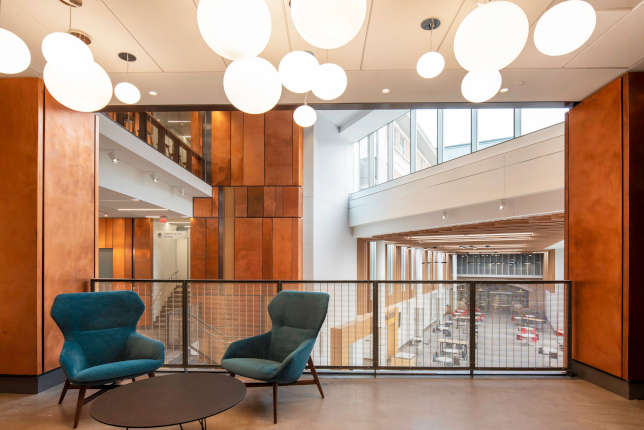
Among the features of the new facility are:

  • Interdisciplinary research laboratories;

  • Experiential learning facilities;

  • Meeting and gathering spaces;

  • Informal meeting and study areas;

  • A career services center;

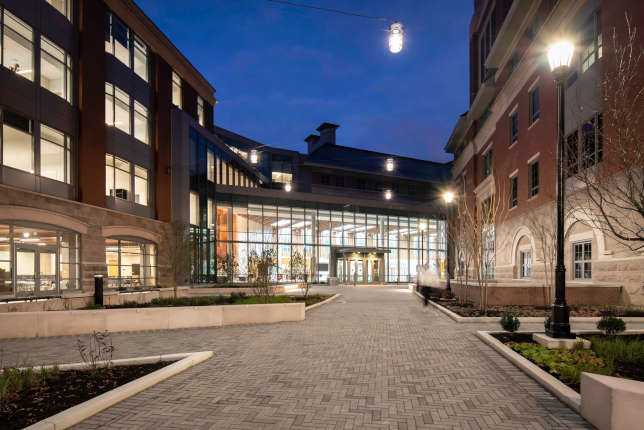
  • Wired outdoor work and gathering spaces; and

  • The "Ram Bytes" café.

University and elected officials were expected to participate in a ribbon cutting broadcast and tour over Zoom on Feb. 3, 2021.
Virginia Commonwealth Shows Off New Engineering Research Building — Virtually

Planning was initially done in 2015. The design was done by Richmond-based architecture firm Baskervill and Boston-based firm Goody Clancy.

About the Author

Dian Schaffhauser is a former senior contributing editor for 1105 Media's education publications THE Journal, Campus Technology and Spaces4Learning.

Featured

  • Rethinking K-12 Schools as a Continuous Learning Experience

    Most students move through three or more separate facilities during their K-12 journey, yet the built environments they encounter at each stage have traditionally been designed in isolation, with little continuity in spatial language, learning philosophy, or physical resources. Each new school is a reset with different layouts, learning models, expectations, and ways of moving through a building. The next generation of school design is making the case that the first day of kindergarten and the last day of high school can and should feel connected through common support systems and infrastructure in the physical environment.

  • Spaces4Learning Announces 2026 Product Award Winners

    Spaces4Learning has just announced the winners of the 2026 Product Awards! The award program spotlights outstanding product development achievements of manufacturers and suppliers whose products or services are considered to be particularly noteworthy in their ability to enhance K–12 and higher-education learning environments.

  • Wold Completes Geothermal Projects at Two Minnesota Schools

    Wold Architects & Engineers recently announced that it has completed two geothermal expansion projects for Mounds View Public Schools in Shoreview, Minn., according to a news release. The work at Highview Middle School and Irondale High School serves the district’s long-term goal of reducing energy costs and dependency on non-renewable fuel sources, as well as improving building performance.

  • Cal Poly Humboldt Starts Construction on Healthcare Education Hub

    California State Polytechnic University, Humboldt in Arcata, Calif., recently announced that work has begun on a renovation project that will turn the Stewart Building into a new Healthcare Education Hub, according to a news release. The university is partnering with Sundt Construction Inc. for construction services.