Nureva Adds Voice Amplification to In-Classroom Audio Systems

Audio conferencing solutions company Nureva Inc. recently announced that it has added a Voice Amplification Mode to two of its audio conferencing systems. The addition to the HDL300 and Dual HDL300 systems will support both in-room amplification of the instructor’s voice as well as full-room pickup of other voices in the classroom for the sake of remote students. The technology is currently available in public beta, and it is available for both K–12 and higher education spaces.

“Instructor voice amplification is required in many classroom scenarios, but in today’s modern classrooms, it needs to be flexible enough to involve remote students,” said Nureva CEO Nancy Knowlton. “The addition of this feature to Nureva audio systems will give educators the multifunction solution they’ve been looking for.”
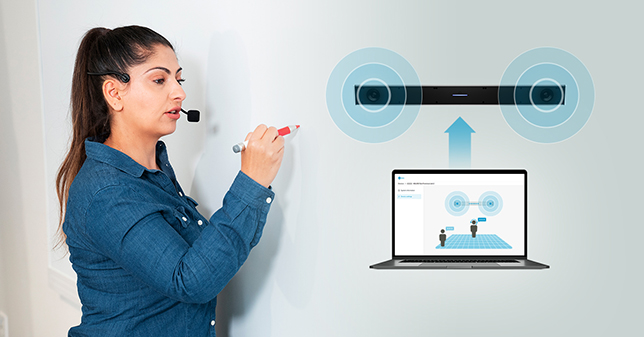
Nureva voice amplification mode

The voice amplification feature uses Nureva’s patented Microphone Mist technology to ensure full functionality across all combinations of in-class, remote, and hybrid learning models. It is currently available to existing HDL300 and Dual HDL300 customers through the Nureva Console. Instructors can use a personal headset microphone to amplify their voices through the in-class speakers, and their voices are also picked up via UC&C clients like Microsoft Teams. This dual pickup is available through a single system.

The feature is expected to be generally available by early fall of this year.

About the Author

Matt Jones is senior editor of Spaces4Learning. He can be reached at [email protected].

Featured

  • Wold Completes Geothermal Projects at Two Minnesota Schools

    Wold Architects & Engineers recently announced that it has completed two geothermal expansion projects for Mounds View Public Schools in Shoreview, Minn., according to a news release. The work at Highview Middle School and Irondale High School serves the district’s long-term goal of reducing energy costs and dependency on non-renewable fuel sources, as well as improving building performance.

  • Rethinking K-12 Schools as a Continuous Learning Experience

    Most students move through three or more separate facilities during their K-12 journey, yet the built environments they encounter at each stage have traditionally been designed in isolation, with little continuity in spatial language, learning philosophy, or physical resources. Each new school is a reset with different layouts, learning models, expectations, and ways of moving through a building. The next generation of school design is making the case that the first day of kindergarten and the last day of high school can and should feel connected through common support systems and infrastructure in the physical environment.

  • Back-to-School Playground Safety: 7 Common Hazards to Look for After Summer Break

    As summer break comes to an end, school administrators have plenty to prepare before students return. While classrooms, hallways and common areas often receive attention during all the back-to-school preparations, the playground should not be overlooked. Months of weather exposure, storms, and regular wear can leave behind hazards that may not be immediately noticeable.

  • UCF Modernizes College of Hospitality Management

    The University of Central Florida in Orlando, Fla., recently completed a major renovation effort for the Rosen College of Hospitality Management, according to a news release. The project modernized 77,600 square feet worth of academic classrooms, teaching labs, and collaborative spaces to support both students and faculty.