Kimball Introduces Modular Workplace Platform
Furniture solutions provider Kimball recently launched a modular workplace platform that adds flexibility to any environment. EverySpace allows users to create their own workspace design to meet changing needs and work styles. The product was designed in partnership with CSD Studio.
The platform offers private and open plan applications, as well as desks, tables and screens, to offer a high degree of versatility and adaptability in size, both vertically and horizontally. A wide variety of configurations of storage, shelves, filing, and screens can accommodate every environment from focused and shared workspaces to collaborative and social ones. The products feature fixed and adjustable-height legs and an integrated wire management channel to keep the space uncluttered. Tiered landscapes add extra flexibility for ergonomic design and space division.
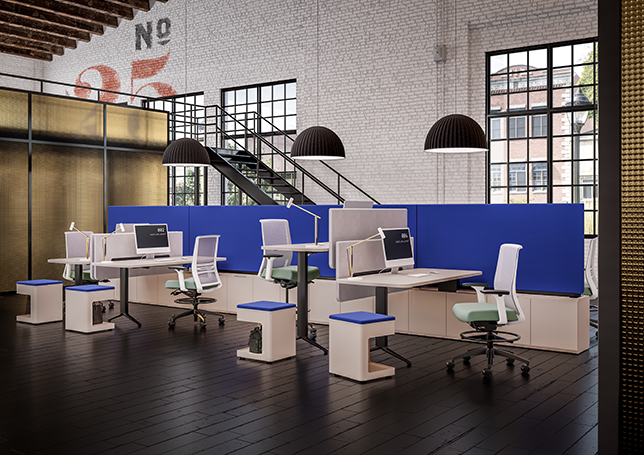
Photo Courtesy of Kimball
“EverySpace inspires designers and end-users to have a completely different visual respect for the workplace,” said Wendy Murray, Vice President of Brand Marketing for Kimball International. “As the needs and expectations of the physical workplace are changing, EverySpace is a complete, flexible offering that fosters belonging and allows people to feel connected with each other and the organization while facilitating performance and supporting well-being.”
More information about EverySpace is available on the company’s website.
About the Author
Matt Jones is senior editor of Spaces4Learning. He can be reached at [email protected].