Armstrong Introduces Direct-Attach Ceiling, Wall Panels

Armstrong Ceiling & Wall Solutions recently introduced its Tectum Create! Direct-Attach line of ceiling and wall panels. The textured panels come in a variety of standard and custom designs to add flair and aesthetics to any space. The 1”-thick panels also provide acoustic benefits, featuring a Noise Reduction Coefficient (NRC) of up to 0.85 depending on the method of installation. According to a news release, the panels could serve as a retrofit solution for noise reduction.
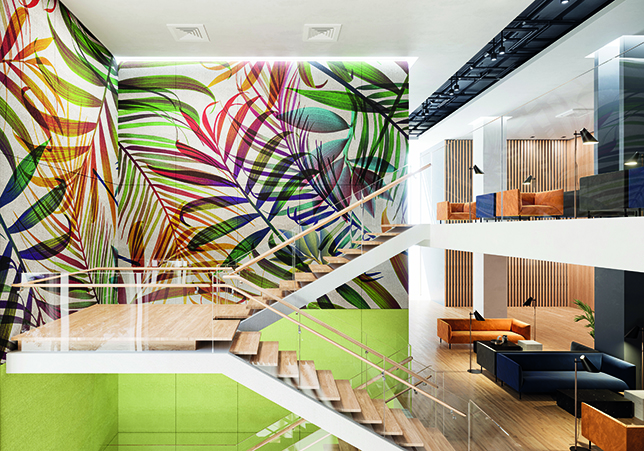
Armstrong Tectum Create Direct Attach Panels
Photo Courtesy of Armstrong World Industries

The panels come in four standard designs: Textured Hex, Exposed Brick, Rustic Plank and Steady Wave. Armstrong can also create custom designs to match any client’s aesthetic. The repeated panel patterns allow the panels to span as far as necessary both horizontally and vertically along a surface.

The panels are available in two sizes: 23 ¾" x 48" and 47 ¾" x 96" with long and short beveled edges. As the name suggests, they can attach directly to a variety of interior wall and ceiling surfaces. The panels are made from cementitious wood fiber and are part of the organization’s Sustain portfolio. They’re also part of the CleanAssure portfolio of easily disinfectable, cleanable products to help make spaces safe and clean.

About the Author

Matt Jones is senior editor of Spaces4Learning. He can be reached at [email protected].

Featured

  • University of Oklahoma Announces New Campus Master Plan

    The University of Oklahoma in Norman, Okla., recently announced that it will soon launch a new, comprehensive Campus Master Plan to guide the campus’ physical development during the next decade, according to a news release.

  • Universities Continue to Launch Multimillion-Dollar Campus Transformations

    What makes the current wave of campus development especially noteworthy is its emphasis on multi-use functionality and community integration. Institutions are no longer investing solely in academic or athletic facilities in isolation. Instead, they are creating destinations that blend recreation, health, housing, and event-driven economic activity.

  • A digital silhouette works at a computer, immersed in a glowing, interconnected world

    How Will AI Transform Learning Space Design?

    For years, higher education has designed learning spaces around technology as a tool for display, capture, collaboration, and connectivity. AI changes that equation.

  • Surging Demand for Student Housing Fuels Major Campus Investment Opportunities

    University leaders throughout the U.S. are accelerating plans to modernize and expand student housing as enrollment stabilizes and demand for on-campus living rebounds. Recent data from the National Center for Education Statistics indicates that total postsecondary enrollment is projected to grow through the end of the decade, with undergraduate enrollment alone expected to increase by more than 8 percent by 2030.