Natural Resources Education and Training Area
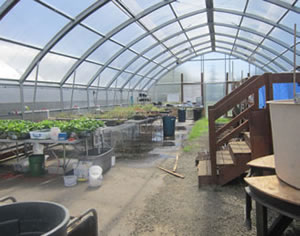
The Elma Agriculture Department in Elma, Wash., needed a facility at the local high school to teach students about growing and aquaculture, as well as to raise fish to replenish the area’s lakes and rivers. They chose a greenhouse that fit well in the space provided for the facility.
The Elma Agriculture Department in Elma, Wash., has greenhouse facilities at the local high school to teach students about growing and aquaculture, as well as to raise fish to replenish the area’s lakes and rivers. The department realized that their current aquaculture facility was no longer efficient and was costing a sizeable sum in sewer expenses. Instructors at the school, including Dave Rutherford, looked at a series of possible solutions and decided that a new structure was necessary. He and the other instructors took the needs of the students into account when choosing a new building. Rather than having a space just for aquaculture, they wanted a multi-use facility.
Rutherford explains, “Bids were accepted from a variety of local companies, along with Growers Supply. No other company could offer us a complete greenhouse with the heating and cooling systems we needed.” The Growers Supply greenhouse fit well in the space provided for the facility and could also utilize the existing drainage system. Rutherford continues, “After we decided on the structure, we approached several companies for grants to help pay for the project. The Weyerhauser Company Foundation and a Lowe’s Community Improvement Grant paid for the greenhouse.”
The greenhouse was constructed by a group of 20 high school students with the guidance of Rutherford, who is not only the natural resources instructor, but also the carpentry teacher. He says, “building this greenhouse was a great lesson for the students. They now show a tremendous amount of pride in what they were able to accomplish.”
Elma’s Natural Resources greenhouse now houses four 800-gallon aquaculture tanks, four misting tables, and is currently raising 1,000 rainbow trout for stocking a local lake and 2,000 Coho salmon to be released into the nearby Chehalis River. Rutherford concludes, “Overall, the entire project has been deemed a success. ”
www.GrowersSupply.com/ADSPM
This article originally appeared in the School Planning & Management July 2013 issue of Spaces4Learning.