Regenerative Education
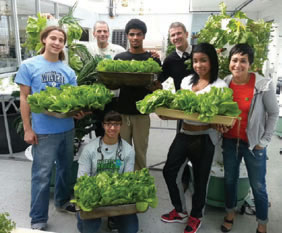
PHOTO COURTESY OF GREEN BRONX MACHINE
Education is a linear process. Elementary grades are numbered sequentially in ascending order as K through 12. In college, freshmen through seniors have their own “first through fourth” numeric association. Any useful demographic mix is squeezed from the experience as classmates march through the process with little vertical mixing of age, academic interest, complimentary skill set or accomplishment. It is quite possible to graduate with many of your first-grade classmates, even though high school programs tend to separate students into different areas of emphasis and study; college prep, vocational arts, language arts, etc. Teaching to the test, academic expectations and core competencies indexed to grade levels keep the pressure on maintaining classes as usual. Much of this is aimed at college placement, and the desire to continue with higher education so the old paradigm trend continues.
“Regenerative education” refers to partnerships between K-12 schools, colleges and universities that transcend the traditional linear process. It is fueled by the high-performance green school movement, built on the community/facility/curriculum construct. The regenerative model involves public/private partnerships that enable cross-curricular, intergenerational learning, richly diverse STEAM groupings (not homogeneous STEM “teams”), academic credit for nontraditional activities, formal relationships between K-12 and institutions of higher learning that enrich the educational delivery process, and a number of other creative, inspirational learning programs. These are manifest in such initiatives as Steve Ritz’s Green Bronx Machine urban gardening phenomenon greenbronxmachine.org, and the work of Susan Toth, Fred Barch and staff in the Florida Atlantic University/Pine Jog Environmental Education program www.pinejog.fau.edu, among others. Each is highly successful and, I believe, extremely valuable as replicable, regenerative models in for many reasons. Among these are the following.
They encourage a culture of hope, cooperation, personal accomplishment, self-esteem and contributing to the community. These qualities and attributes may or may not be found in the traditional “teach to the test” classroom regimen, but they are clearly visible in these programs. The Green Bronx Machine has garnered national and international attention and has a growing list of partners who have enabled Steve to transform whole communities and school cultures. His ability to elevate school attendance from 40 percent to 93 percent, while providing food, jobs and opportunities to students and their families, the homeless and disenfranchised in one of the poorest school districts in the U.S., is nothing less than stunning. The educational benefits are incalculable.
The FAU/Pine Jog program has enjoyed similar success on a smaller but growing scale by partnering FAU Environmental Education Students with the K-5 population of Pine Jog Elementary School taught in partnership with the adjacent Pine Jog Environmental Education Center. Inviting a number of community stakeholders into the process buoys the hands on approach and provides teachers and students with a diverse mix of expertise and resources multiplied by the ways they are integrated into the K-5 educational experience. The Pine Jog School gardening activities are woven into a number of classes and school activities, including supporting the local food banks.
Each recognizes the value of architecture as pedagogy and the power of using school facilities and the community as teaching tools. Eighty percent of American students who drop out of school have passing grades; they simply don’t want to be there. The Green Bronx Machine and the Pine Jog programs are examples of how creative approaches to education can inspire students to learn. The enthusiasm for learning by doing in nontraditional “garden classrooms” is obvious when you interact with students in these programs. Equally obvious are the improvement in test scores and the reduction in negative social consequences when students are well fed, physically and emotionally healthy, empowered, gainfully employed and respected. Lost in the excitement of the students’ success is the attendant reduction in the amount of school property that needs conventional maintenance, improved property value, lowered vandalism, community pride and increased grant opportunities that can benefit a number of school programs.
More significant, perhaps, is the rich mix of race, creed, and age, the lack of school grade specific parameters or economic class distinction, and the intergenerational mentoring and love that saturates each of these programs. Conditions in the South Bronx differ from those in South Florida, but the dedication of those involved to educating students to be responsible global citizens is the same. Each serves as inspiration to countless others, and that is a trend I hope will continue to grow.
This article originally appeared in the issue of .
About the Author
Robert Kobet, AIA, LEED Faculty, is president of The Kobet Collaborative, a multidisciplinary architectural and education consulting practice specializing in sustainable design and development and environmental education. TKC has completed a variety of projects in twelve countries on five continents including schools in very challenging environments. Mr. Kobet is Chair of LEED for Schools and has enjoyed a parallel career in higher education as a college professor teaching a number of courses and studios on sustainable design and development.