Durable Faucets Equal Less Maintenance
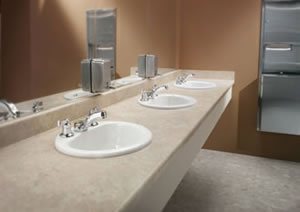
Moen’s M•Dura faucets have helped to reduce maintenance costs in some of Metropolitan Nashville Public Schools’ busiest restrooms.
Not many school systems have a history as rich as that in Nashville. Its oldest school presently in operation dates back to 1806. Over the years, the Metropolitan Nashville Public Schools (MNPS) has evolved into one of the most racially, ethnically and socioeconomically diverse school districts in the country. It’s comprised of 139 schools, including not only elementary, middle and high schools; but also three alternative, four special education and five charter schools. And while the system today serves students from more than 80 different countries, it also counts Betty Page, Dinah Shore and Oprah Winfrey amongst its proud alumni.
MNPS may have a rich history, but its buildings have seen significant wear and tear. Most notably, its restrooms and kitchens, two of the most-often used rooms in the schools, have required considerable renovations in recent years.
“The maintenance team at MNPS contacted Ferguson to assist in seeking out new lavatory faucets, because their previous models weren’t lasting and had to be replaced constantly (on average, every one to two months),” says Rick Hollis, product specialist, Ferguson. “We worked with Moen initially on a trial run and installed three M•Dura heavy-duty faucets in one of their most heavily-used restrooms, to see how long they would last. That was two-and-a-half years ago, and we’ve never had to replace a faucet.”
Hollis, along with Tim Millay, director of Commercial Sales for Moen, recommended the M•Dura faucet line because it features unmatched durability and reliability. “The M•Dura line provides the ultimate combination of updated styling and heavy-duty construction,” Millay says. “These models can stand up to the extreme wear and tear found in most commercial applications, plus they’re backed by a five-year warranty against material or manufacturing defects, so our customers know they are getting the best product on the market, guaranteed.”
Since the trial run was so successful, MNPS moved forward in installing 400 M•Dura lavatory and kitchen faucets throughout the district.
This article originally appeared in the issue of .