Daylighting Leads to a More Engaging Environment
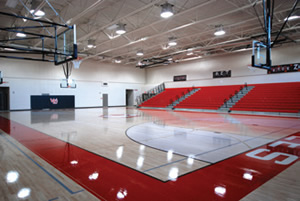
Westside Christian High School gave students the benefits of natural light by installing Series M74 DS units for daytime lighting in the gymnasium.
Westside Christian High School is a non-denominational educational facility located in Tigard, Ore. After 33 years, the student population had outgrown the current space, prompting the construction of a new campus near downtown Portland.
Incorporating daylight into the school’s new interior gym became a main objective for administrators who wanted students to benefit from exposure to natural light during the school day while reducing the building’s electricity use.
The original strategy was to install traditional skylights, but concerns about adequate illumination and hot spots prompted the architect to seek other options.
InteriorTech, a building specialty contractor, proposed the use of Solatube Daylighting Systems, which, when compared to traditional skylights, provide a greater abundance and higher quality of light while reducing energy use.
Ultimately, InteriorTech installed 20 Solatube SkyVault Series M74 DS units for daytime lighting, complemented by LED lights with timers for nighttime lighting.
The advanced optics of the SkyVault Series captures massive amounts of high quality daylight for abundant output during athletic events, assemblies, and concerts.
With daylight illuminating the gym, electric lights stay off during the day allowing the school to cut its electricity consumption, lower its utility bills and minimize its carbon footprint.
Studies have shown that natural sunlight helps students feel more engaged, optimistic, and perform better overall. In addition to gymnasiums, daylighting can also be utilized in traditional classroom settings. Solatube’s SolaMaster Series is ideally suited to the classroom, providing clear, natural daylight to increase student engagement and responsiveness.
www.solatube.com
This article originally appeared in the issue of .