Student Center Goes From Dreary to Vibrant
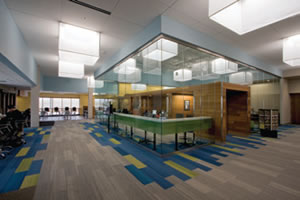
Student Center Goes From Dreary to Vibrant

Transforming the student center at Waukesha County Technical College required new and vibrant lighting. Solatube was up to the challenge.

The Waukesha Campus of Waukesha County Technical College (WCTC) in Waukesha, WI, includes a service building, which housed a student center in need of new life.

“The cave-like environment of the student gathering area was very oppressive. It was truly incredible to see the transformation of the space once the Solatube units were installed,” says Keith Johnson, owner of Brighter Concepts.

Dubbed “the cave” for its dark and gloomy atmosphere, the student center was unpopular with students. With a budget of $600,000, the school sought to transform the dark and dreary environment into a bright and cheerful place where students would want to congregate.

According to Matthew Kerr, IIDA, ASAI, senior associate and interior designer at Zimmerman Architectural Studios, the renovation’s main objectives were filling the space with natural light and creating auditory separation without disrupting the visual “openness” of the existing space.

Local Solatube Certified Commercial Distributor, Brighter Concepts, installed twelve Solatube SolaMaster 750 DS Core Units. The units integrated with LED lighting for nighttime use and maximum energy efficiency. Custom square-shaped fabric lanterns added a decorative element at the ceiling level.

According to Brooks Kyler-Eberlein, WCTC interior design instructor, the addition of Solatube Daylighting Systems took “the cave” from an underused, dark space to a vibrant, active hub for students. The use of natural light by day and LED light by night also provided WCTC with an efficient long-term solution to energy costs.

www.solatube.com

This article originally appeared in the issue of .

Featured

  • Building Beyond Simulation: Creating Immersive Ecosystems for Healthcare Education

    Health sciences education is one of the fastest-growing facility types in colleges and universities. The demand for medical, nursing, and allied health professionals is driving the creation and renovation of medical simulation training facilities that provide students with real-world experience through advanced simulation-based learning.

  • Q&A: How to Prevent Kitchen Grease Fires in Commercial Kitchens

    School cafeterias and university dining halls serve thousands of meals daily, relying on high-heat equipment like fryers, grills, and ovens. While these operations keep students fed, they also generate significant grease-laden vapors. Without proper controls, this grease becomes a silent fire threat. As a certified exhaust cleaning specialist and business coach who has helped hundreds of institutional facilities achieve NFPA 96 compliance, I emphasize that proactive grease management isn’t optional; it’s a core fire/life safety practice.

  • Washington State University Debuts New Engineering Hall

    Washington State University recently celebrated a dedication ceremony for the new Schweitzer Engineering Hall on its Pullman campus in Pullman, Wash., according to university news. The facility measures 66,288 square feet, and its completion marks the first milestone in a larger university effort to modernize the engineering and design district.

  • Back-to-School Playground Safety: 7 Common Hazards to Look for After Summer Break

    As summer break comes to an end, school administrators have plenty to prepare before students return. While classrooms, hallways and common areas often receive attention during all the back-to-school preparations, the playground should not be overlooked. Months of weather exposure, storms, and regular wear can leave behind hazards that may not be immediately noticeable.