An Electric Utility Vehicle for Both People and Cargo
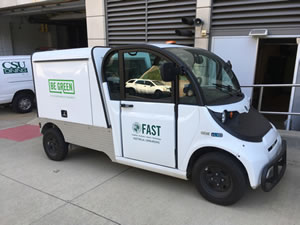
Built with quality and durability in mind, GEM from Polaris helped the Electrical Maintenance department at Cleveland State University get more work done both indoors and out.
When Cleveland State University’s (CSU) Electrical Maintenance department needed a new utility vehicle, their choice was the Polaris GEM. The electric GEM eL XD low-speed vehicle helps the department tackle just about any maintenance task without needing to fuel up.
“We knew we wanted an electric utility vehicle, and we chose the GEM eL XD because of the number of configurations offered,” says David Pekala, crew leader for CSU’s Electrical Maintenance department. “We were able to customize the machine to fit our needs, adding a 44-inch cab L-Box to protect cargo.”
The GEM eL XD is the first vehicle of its kind to offer a recessed bed option to lower loading height and maximize hauling capability. More than 20 bed configurations and a wide variety of accessories are available for full customization. Pair these options with the GEM’s generous ground clearance, 1400-pound payload capacity and safety features and you’ve got a work vehicle you can count on.
“The GEM gets us from point A to point B quickly and it fits into tight spaces,” adds Pekala. “It goes where our other vehicles can’t.” Because it is electric, the GEM eL XD can be driven indoors as well as out. It handles off-road areas such as turf and sidewalks and is legal to drive on streets in most states and provinces, typically on roads marked up to 35 mph.
Built with quality and durability in mind, GEM features an aluminum chassis that passes SAE roof-crush-test standards, front-wheel disc brakes, an automotive-style suspension and a variety of maintenance-free battery options. The result is a reliable, zero-emissions vehicle with a smoother ride. Whether you’re moving people or cargo, GEM utility vehicles get the job done easily and efficiently.
www.polaris.com
This article originally appeared in the issue of .