Students Benefit From Safer Flooring
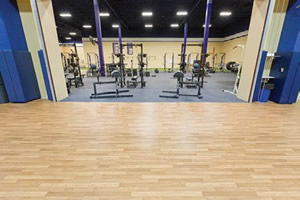
CCA students benefitted from safer, slip-free flooring in their athletic center and the school benefitted from procuring a durable, longer-lasting floor that requires less maintenance over time.
“Everything starts with the flooring,” says Dana Ridenour, director of advancement at Calvary Christian Academy (CCA), a pre-K3–12 school located in Fort Lauderdale, Fla., and committed to excellence in academics, athletics, arts, technology, leadership, and ministry. “Then you can start building and painting; but, you have got to have a great floor first.”
CCA recognized the significance flooring has in a space. So, when CCA renovated its fitness center in the spring of 2017, school leadership listened to the recommendation of Legend Fitness, a fitness equipment manufacturer involved with the project, and specified Ecore Athletic surfacing.
“When I visited the site for the first time, I saw a student trying to push a sled on concrete, and it wouldn’t move,” says Troy Kelley, director of Athletics for Ecore. “It’s impossible to push a sled on that surface. It’s not good for the sled, the athlete or the floor.”
That’s because the surface of the entire fitness center, which is housed inside a former warehouse adjacent to the campus, was concrete. Kelley suggested four surfaces that provide safety, ergonomic and acoustic properties for this 3,774-square-foot space, which is used by more than 200 students and student athletes daily.
CCA had 1,482 square feet of Monster Roll installed in the weight lifting area, which features 14 racks with custom, inlaid platforms for Olympic-style weight lifting. Monster Roll is a 22.5mm system designed to provide the firm footing desired in strength training with the ergonomic demands of aggressive functional training. “It’s going to save us so much on weights and other equipment, because all that stuff is no longer getting banged up,” says Ridenour.
CCA is extremely happy with the outcome of the renovation and all of the surfaces in the fitness center. “We waited a long time to get this project done,” says Ridenour. “The products are just fantastic. For the first time, we have safe and slip-free surfaces.”
www.ecoreintl.com
This article originally appeared in the issue of .