Universite de Saint-Boniface
Project Snapshot
PROJECT: Classroom Retrofits
INSTITUTION: Université de Saint-Boniface
LOCATION: Winnipeg, Manitoba, Canada
COMPANY NAME: Connectrac
WEBSITE: www.connectrac.com
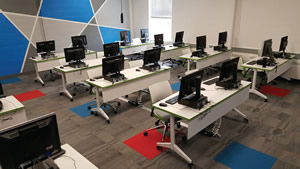
The Université de Saint-Boniface is recognized for its integrated approach that prepares students for higher learning and the workforce. Access to and use of technology is vital to the university’s mission. The flexibility of Connectrac’s wireway installation has contributed to successfully providing the access students need.
THE CHALLENGE
Each school year, the Université de Saint-Boniface in Winnipeg, Manitoba, Canada, retrofits a few classrooms to create a more active learning environment. This summer, the university renovated their IT classrooms to provide power and data capabilities to student desks as well as the instructor lectern. For IT classes, technology access was a must.
“We needed LAN and power connectivity for student computers, USB outlets for their laptops, as well as an effective wire management solution for the instructor’s desk,” says Robert Simard, director of Facilities and Security at the university. “Quite a bit of wiring goes into the professor’s area. We were looking for a clean solution.”
THE SOLUTION
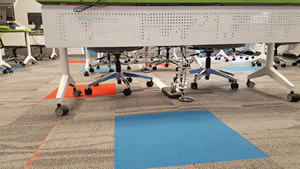 After seeing the Connectrac In-Carpet option in an issue of CFM&D magazine, Simard and the project team ordered and installed the product into their classrooms. The wireways went under the student desks to provide power, LAN, and USB capabilities for each table which was then distributed to the students station via a under table wire management system. Subsequently, the instructor lecterns in each classroom received power and data access, ensuring the connections they needed.
IMPACT ON LEARNING
For the university, the greatest benefit of using Connectrac is the wireway’s flexibility to be moved or reconfigured if and when future changes come along to the classroom. Given today’s rapidly changing learning environment, “We wanted to be able to move things around if we need to,” Simard says. “With Connectrac, we know we can make different configurations if we need to. The ability to transform the classroom quickly and efficiently is something we’re really seeking.”
The classrooms have been put into service, the school year has started off smoothly so far at the Université de Saint-Boniface, and future Connectrac installations are in store for future renovations.
Editor’s Review
Research into the benefits of technology in academic settings has shown technology—when implemented properly—can produce significant gains in student achievement and boost engagement. Technology supports student collaboration and allows instructors to design how material is presented in the classroom. This project benefits students, instructors, and the university itself by allowing for streamlined, configurable access to power and data.
This article originally appeared in the College Planning & Management March 2018 issue of Spaces4Learning.