Protecting 25,000 Student in Today's World
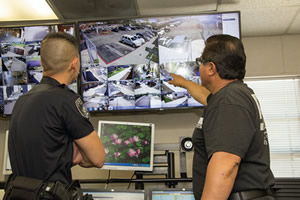
Video surveillance integrated with intrusion and fire alarm systems gives the CUSD police the real-time information they need, providing intelligence that helps keep the officers safe when they respond to a situation.
The Compton Unified School District (CUSD) Police Department, which is using a Dahua Technology surveillance solution, has an admirable commitment to protecting the district’s 25,000 students.
The CUSD police department was created in 1968 due to an increasing need for a police force that understood the unique challenges of an educational environment. Today, their comprehensive security system covers 37 schools and six district office.
CUSD chose a Dahua IP video surveillance system. This is a complete solution for the school system with Wi-Fi cameras, NVRs, three smart switches, and a surveillance management center. Local installer Advanced Alarm Inc. has outfitted the police department complex, warehouses, transportation facilities, various school sites, and administrative offices with surveillance. IP surveillance, of course, comes with the additional benefit of remote access, which is huge. As William Wu, J.D., chief of Police for CUSD explains, “Having a comprehensive safety and protection plan in today’s world means having real-time information on what is happening at various locations over which we are responsible.”
Wu points to the remote access capability of his system as a huge benefit, “For me, or the deputy superintendent, or anyone else who has access to the video surveillance system, we can see it from home, or as we’re driving on patrol. We can pull up video feeds of various sites, so that gives us the capability that a fixed access console system doesn’t have.”
We are always looking for ways to improve on how we perform our mission,” he continues. “It is unfortunate, but in the world that we live in, no matter what your job is at the school, security has to be on your mind somewhere. We don’t have the luxury of forgetting about security.”
www.dahuasecurity.com
This article originally appeared in the School Planning & Management March 2018 issue of Spaces4Learning.