Cost-Savings and Comfort with Zoned Technology
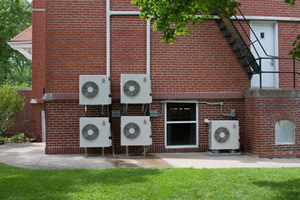
St. Joseph School was able to save money on electric bills and increase overall comfort with Zoned Comfort Solutions from Mitsubishi.
St. Joseph School (St. Joseph’s), a small, private Catholic school in Pilot Grove, MO., has been in operation since 1902. Since its establishment, the school has been educating students between grades one through eight. After many years running on an outdated boiler system and noisy window units, the school needed to find a system that could efficiently cool and heat the 5,400-square-foot building year-round without disrupting day-to-day activities. The solution: Zoned Comfort Solutions from Mitsubishi Electric Cooling & Heating (Mitsubishi Electric).
The renovation started with a need for comfort. Nichole Watring, principal, says, “The boiler system that was in place previously didn’t heat the rooms evenly. The building is a two-story building with a basement, and the upstairs rooms were always much warmer than the downstairs rooms. There wasn’t a way for the teachers to control the temperature in their rooms, and the window units for the A/C were very noisy. It was hard to hear when the units were running, but when they were turned off, the rooms warmed up quickly.”
With these needs in mind, the school began its search for a new system and reached out to Jamie Callahan, director of field operations, Air and Water Solutions, Columbia, MO., to assist in the process. Immediately, Callahan believed there was only one solution for St. Joseph’s—zoned technology.
With the technology selected, Callahan offered Zoned Comfort Solutions from Mitsubishi Electric as the brand for the school to install.
Since installation, Callahan has received nothing but positive feedback from the school, specifically with the system’s ability to offer cost savings. He says, “From what I’ve heard, the school went from paying thousand dollar electric bills to paying $245 a month. That’s nearly 25 percent of the original cost.”
www.mitsubishipro.com
This article originally appeared in the School Planning & Management March 2018 issue of Spaces4Learning.