Daylighting Systems for Energy Efficiency
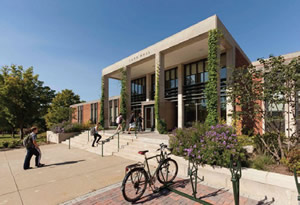
Solatube Daylighting Systems were used throughout the classrooms and labs at Allegheny College, allowing the buildings to cut down on electricity used and harness the power of daylighting.
Founded in 1815, Allegheny College is a private liberal arts college located in Meadville, PA, and an acknowledged leader in sustainability. The college was one of the first to join the U.S. Department of Energy’s Better Buildings Challenge to upgrade energy performance by a minimum of 20 percent by the year 2020.
Carr Hall, an existing building built in the 1960s, was renovated to become a showcase for the campus’ environmental stewardship. The renovated building is home to the new Richard J. Cook Center for Environmental Science, honoring the former Allegheny College president who was passionate about science education and the environment. The Pittsburgh architectural firm of Perfido Weiskopf Wagstaff + Goettel teamed up with Massaro Corporation to achieve LEED Gold certification for Commercial Interiors. Providing daylight throughout the labs, classrooms, and lobby in this multistory building was one of the primary objectives.
Solatube Daylighting Systems, supplied by local representative M&M Specialty Products, were used throughout the classrooms and labs, allowing for the spaces to be independent of electric lighting most days. The most striking Solatube application is in the lobby area. Special custom black sleeves were designed to fit over the Solatube tubing to create a striking visual against the custom wood ceiling. The Solatube units in the lobby also serve to provide daylight for a living wall of plants.
“We’ve been extremely pleased with the inclusion of a large number of Solatube Daylighting Systems throughout the renovation. It is one of the features that most excites visitors and those that study and work in the building—first because they’re so surprised to hear that daylight rather than artificial light is illuminating the space, and second because it adds to the warm, natural quality of the space. They have allowed us to reduce our electricity consumption while maintaining plenty of light,” says Kelly Boulton, sustainability coordinator for the college.
www.solatube.com
This article originally appeared in the College Planning & Management June 2018 issue of Spaces4Learning.